
Sanctuary was conceived in the arrivals queue at Stansted. It was my first time, and the whole thing was over in seconds.
“What if,” the muse whispered, “a refugee lawyer like you were to claim asylum in your own country?”
I closed my eyes and saw an immigration officer beckoning me forward. “No have pasaporte,” I told her, attempting a Hispanic accent. The officer sank into a trap room, the stage revolved, and in the middle distance I could make out the concertina wire and yellow brick walls of an immigration removal centre. I walked up to the door and opened it. The writing had begun.
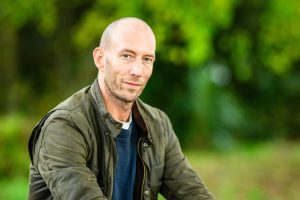 Long before Sanctuary was published, I worked in immigration and asylum law at a top-ranked firm in Tottenham. There, I developed an indignant, sometimes self-righteous disdain for our government’s treatment of vulnerable migrants and asylum seekers. If we are the protagonists of our own lives, the Home Office was my antagonist. We fought them day in, day out on our clients’ behalf, essentially to protect basic human rights. It was rewarding, while also gruelling.
At first, the novel was a kind of escape: a way to explore that world through a playful, satirical, romantic lens. Later, the escape became something else. I began to see the book as a vehicle for taking readers into a legal and moral landscape, and not letting them leave unchanged.
Then, like any good villain, reality turned up to wreck my plot. In 2017, Callum Tulley blew the whistle on abuses at Brook House IRC. “It’s just like your story idea,” a friend told me, and my heart sank – for the victims, for all of us in whose name these places were being run, and for my fragile novel. I wrote faster, and made the crime at the heart of my story so heinous it couldn’t possibly happen in real life.
Life, of course, kept pace.
Working as a barrister left little time for writing, but the pandemic offered a strange window. By then my wife was working as a consultant paediatrician in Gibraltar, and we were living across the border in Spain with our two-year-old and her newborn sister. Time was still scarce, but I finished a draft. Then came Rwanda, and suddenly the parallels between policy and plot were impossible to ignore. A retired literary agent friend suggested I “hang fire” on submitting. Instead, I absorbed what was happening into the manuscript and kept going.

Somewhere in the middle I hit what publishing people call the dark night of the soul. Ten years had passed. I’d devoted an inordinate amount of thought to a book that still didn’t feel complete, and I couldn’t put my finger on why I’d been compelled to write it.
Reluctantly, I set the draft aside and began blueprinting another novel. It was only then that something clicked. I realised the tension I kept circling – freedom, responsibility, dignity, control – ran through my writing, and through me. I went back, gave the manuscript the inner story it had been crying out for, renamed it Sanctuary (its working title, The Muse and The Mole, had never suited it), and handed it over.
And here we are. The book is out in the world and I’m proud of her. I’d say we’re proud of her – only the muse speaks for herself.
Sanctuary (Cinto Press) is out now.

 Cull & Co. Literary Agency Ltd