Despite the dog days of summer, Cull & Co. authors have been busy, receiving national and international press and reviews, appearing on podcasts and taking part in literary festivals and events across the UK and beyond.
Travel writer Dan Stables has continued a busy year with a new feature in The i Paper exploring some of Britain’s quirkiest summer festivals. The paperback edition of his acclaimed book Fiesta: A Journey Through Human Festivity was published in July, while Dan has contributed further travel writing to The New York Times and Wanderlust. He also appeared at the Dartmouth Book Festival in September and at the Chelsea History Festival on 1 October, discussing Fiesta and the extraordinary ways people celebrate around the world.
Ahead of its US publication in October, Joe Luc Barnes’sFarewell to Russia: A Journey Through the Former USSR has attracted strong US trade attention. Foreword Reviews called it an “epic and revealing travel memoir”, while Library Journal praised it as “an enthralling and insightful travel memoir of the former Soviet Union”. Closer to home, Joe has continued a busy programme of events and appearances, including a discussion for the Royal Society for Asian Affairs exploring his journey through the fifteen former Soviet republics and the changing relationship between Russia and its neighbours.
Tom Gaisford’s novel Sanctuary has received terrific endorsements from both The Secret Barrister, who calls it “a triumph” and “compellingly written and bursting with humanity”, and bestselling novelist Chris Cleave, who says: “Everyone should read this furious defence of the voiceless.” The novel explores Britain’s asylum system through the intertwined stories of a young barrister and an Iranian refugee.
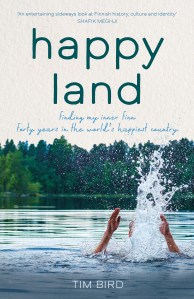
Tim Bird’sHappy Land was selected by Wanderlust as one of its Best Travel Books of 2026 So Far. The recognition follows an extensive run of coverage for Tim’s thoughtful exploration of Finland, its people and its much-discussed status as the world’s happiest country.
Christiana Spens’s novel The Colony received an in-depth review in literary magazine The Bottle Imp, which praised the book as “an unusually sophisticated enquiry into the limitations of both individualism and community”.
Historian Seth Thévoz joined the long-running I Hear of Sherlock Everywhere podcast for a dedicated discussion of London Clubland, exploring the history, rituals and hidden influence of London’s private members’ clubs. Seth has also continued his regular appearances on The Bunker, bringing his expertise to discussions of British politics, international affairs and political finance.
Professor Melissa Butcher appeared at the Bradford Literature Festival for America at 250: Empire, Democracy and Global Power, discussing American democracy, political division and global power. Melissa also joined the New Books Network for an extended interview about The Trouble with Freedom, her exploration of the idea of freedom and its central—and increasingly contested—place in American political life.
Award-winning travel writer Shafik Meghji joined the Winging It Travel Podcast for an extended conversation about Small Earthquakes: A Journey Through Lost British History in South America. The appearance follows an exceptional period for the book, which won Travel Narrative Book of the Year at the British Guild of Travel Writers Awards and was shortlisted for the Edward Stanford Travel Book of the Year.
Robert Sellers’sThe Cambridge Footlights: From Revue to Revolution continues to attract praise, including selection as a Book of the Month by Best of British. The definitive history of the legendary comedy institution has also attracted coverage and reviews from the Mail on Sunday, Literary Review, Chortle and LouReviews.
Congratulations to all our authors whose books, journalism and ideas continue to find new readers, listeners and audiences around the world.
THE SPYMASTER’S WIFE began when my cousin, Juliet Clibborn, sent me a few pages of her memories of the early days of her marriage to her husband, John (Clibborn). She and John had had a very interesting and special time together and she wanted to set it all down for her children. But it was not easy to see how to do this.
But when I read the description of how John told Juliet about his ‘real’ job in the SIS, I immediately thought what a wonderful start it was to a novel. I suggested that maybe we could take these series of incidents in their life and turn them into a novel.
And so it began.
Juliet had about a dozen iconic scenes from her time in Cyprus and the challenge was to devise a plot, drop them into it and then people the book with interesting characters. We agreed that, in order to keep this purely fictional, all our characters would be unlike those who had been part of her life. However, we did stick to the basic arrangements and positions of the people she and John were surrounded by and the part they played in their lives. For example, there really was a downstairs neighbour who sent Morse code at night with the tapping echoing up the water pipes. However, he and his wife were nothing like Mike and Sandra.
Juliet Clibborn and her husband John
Juliet and I met up and decided on the names for our characters, taking the main names from our family as a kind of tribute to them, but at the same time knowing that these fictional creations were nothing like them. For example in the novel we have called Elizabeth’s mother Peggy. Peggy is the name my own mother was known by, but Peggy’s character (with the exception of her driving ability and ATS backstory) is nothing like my mother. Like all the characters in TSW, Peggy is her own person and she grew and developed within the novel as all fictional characters do.
And so the novel began to take shape. I would write a few chapters and send them to Juliet who would read them and comment, particularly on the authenticity, because one of our main concerns was that this did reflect her experience in a real way. It was interesting and a fine line to tread.
For the political background I discovered that fifty years on there is a lot of information online. I was particularly thrilled to find a very interesting PhD thesis on the friendship and close ties between the Greek and Turkish Cypriots and that they even had a name: Koumbaroi. It is times like this when a writer knows that things are working out well.
Our aim for this book has been to reflect accurately the experience of a very young woman who found herself in the centre of a strange, and very hierarchical, male-centred world. And, along the way, to shine a light on what is now a vanished time.
The book will be published on March 11, 2027 and can be pre-ordered now.
Cull & Co. is delighted to announce that The Spymaster’s Wife by Liz Denchfield will be published by Bedford Square Publishers.
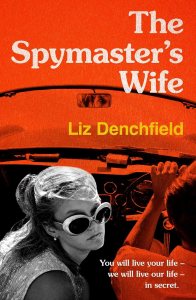
Based on remarkable true events, The Spymaster’s Wife follows nineteen-year-old Elizabeth, whose new husband’s secret career in espionage transforms the course of her life after they are posted to Cyprus in 1968. Set against a backdrop of Cold War intrigue, political upheaval and international postings, the novel offers a fascinating glimpse into the hidden world behind Britain’s intelligence services.
It’s 1968 and nineteen-year-old Elizabeth has had the perfect day: in love for the first time, a picnic in an orchard welcomed by Alec’s beloved aunt in her cottage on the South Downs, hearing about how well her fiancé is doing in the Foreign Office. But as they speed back to Chelsea through the darkening countryside in his open top Jaguar, she knows something’s wrong. He pulls over, and she feels her heart sink.
Atmospheric, page-turning escapist fiction for readers who love novels based on fact and history: Victoria Hislop meets Ava Glass in the Cold War
Liz Denchfield is the writing name of first cousins Juliet Clibborn and bestselling author Angie Sage. Drawing on Juliet’s own experiences as the wife of a British intelligence officer, the novel combines historical authenticity with a compelling personal story.
Congratulations to Liz and the team at Bedford Square Publishers. We look forward to seeing The Spymaster’s Wife find readers when it publishes in 2027.
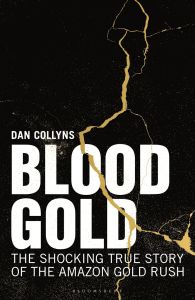
We are proud to announce that Bloomsbury Publishing acquired rights to Latin American journalist Dan Collyns to the shocking exposé of the dirty trade of gold and how it is pushing the world’s biggest rainforest to the brink of collapse.
Gold has a powerful hold over our civilization. The precious metal first attracted the Spanish conquistadors to the new world. For the Incas, only royalty could wear gold. Louis XIV covered Versailles from floor to ceiling in gold. It is excess, wealth, domination and power.
In this gripping investigation into the murky origins of gold, journalist Dan Collyns explores the world of gold mining in South America. From the Inca palaces stripped of their riches and the craters of illegal mining in the Amazon, to the Indigenous peoples fighting for survival to the firms laundering gold via the Swiss refineries, jewellery makers and bank vaults of the world – Collyns shows how the extraction and sale of ‘blood gold’ in South America grew from a colonial history of plunder and oppression. More urgently, he will show how we can stem its flow.
Travelling to the illegal mining operations deep in the Amazon, Collyns reveals the extraordinary levels of toxic mercury which are being spilled into the world’s largest biome, the shocking sister trade of the many underage girls trafficked into sex slavery and the corruption the western hunger for gold has unleashed across South America – for criminal mafias, gold is an even bigger business than cocaine.
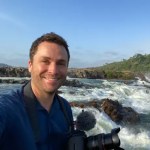
Dan Collyns is an award-winning multimedia journalist covering Latin America based in Lima, Peru. He reports on everything from food to freedom of speech but specializes in the environment, development, and human rights. He has been reporting for The Guardian for more than a decade from Peru and the region, as well as for the BBC, CGTN America, the Thomson Reuters Foundation (TRF), and Mongabay, among others.
Collyns is the founder and director of Yachay Productions. He won second place at the 2021 Overseas Press Club’s Robert Spiers Benjamin Award for best reporting in any medium on Latin America for a documentary that he co-directed called The Adventures of Wonder Woman: Inside Peru’s War against Illegal Gold Mining.
Gripping, courageous and meticulously reported, BLOOD GOLD is a book that deserves to be read.
Lots of green shoots for our authors as spring arrives.
Elliott Gotkine’sThe Wrong Guy has had a terrific launch and anniversary burst, with national press, international syndication, television, radio, podcasts and viral coverage all revisiting the extraordinary Guy Goma BBC mix-up twenty years on.
The book has been covered in The Telegraph, The Times, the Daily Mail, The Sun, LADbible, Boing Boing, and internationally via a New York Times / Irish Times-syndicated piece. It has also had broadcast and audio attention from This Morning, Times Radio, LBC / James O’Brien and The Addition podcast.
The coverage has rightly treated the story as more than just “TV’s greatest cock-up”: an early-internet legend, a workplace nightmare, a strangely uplifting human story, and now a book co-authored by the two men at the centre of it.
Twenty years on, Guy Goma is still recognised, still asked for selfies, and still remembered as the man who survived every job applicant’s worst nightmare live on national television. Elliott, meanwhile, has turned the whole astonishing episode into a sharp, humane and very funny account of what really happened behind the scenes.
Guy and Elliott on ITV’s This Morning
Christiana Spens’The Colony is beginning to gather exactly the sort of literary and cultural attention it deserves ahead of publication by Salt. It is a dark, stylish and unsettling novel about wellness culture, escape fantasies, toxic intimacy and the dangerous appeal of surrendering yourself to someone else’s vision of freedom.
The Herald has already reviewed the book, with Alastair Mabbott calling it “a dark, satirical takedown of wellness culture” and “a thought-provoking examination of power and submission in relationships”. That feels exactly right: beneath the satire is something much more troubling about longing, control, performance and the modern hunger to disappear into a better life.
Christiana has also appeared in 3:AM Magazine, in a wide-ranging piece that touches on Paula Rego, psychoanalysis, ballet and The Colony, placing the novel in a broader artistic and psychological conversation. It is a book with cult energy in every sense: elegant, dangerous, claustrophobic and hard to shake off.
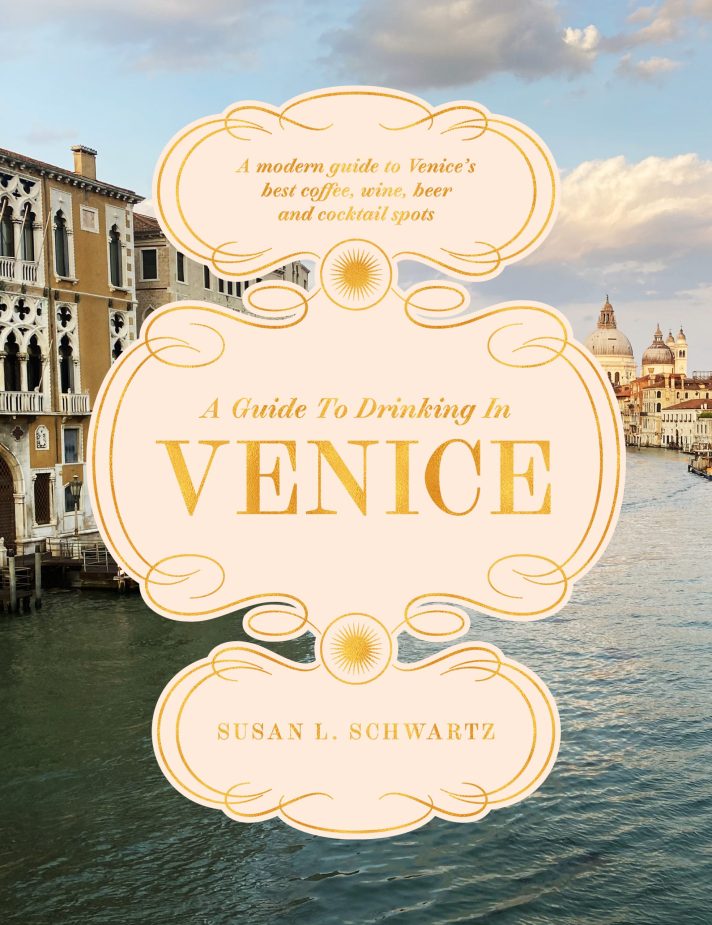
Susan L. Schwartz’sA Guide to Drinking in Venice is off to a lovely start, with national press, launch activity and festival attention around the book. The Independent ran Susan’s piece, “From the Bellini to the Spritz – how these Venice classics became the drinks of summer”, drawing directly on the stories behind A Guide to Drinking in Venice and the city’s extraordinary drinking culture.
Published by Quadrille / PRH, the book has also had launch activity in the UK and US, and Susan is appearing at Hay Festival on 26 May 2026 for a sold-out talk and tasting on Venice’s bars, cafés, wines and cocktails.
The launch of the book took place at Bar Oriole in Covent Garden and was attended by Julian and Emma Fellowes. Some beautiful photos were captured by India Jane here.
Susan with Julian Fellowes (Photo credit: India Jane)
James Owen’s debut true-crime book The Wicked Among Us continues to attract strong regional, broadcast and podcast attention in the US.
The Springfield News-Leader published an in-depth feature revisiting the unresolved 2007 murder of attorney Rolland Comstock, exploring Owen’s personal connection to the case and the long road to publication.
James has since appeared across multiple broadcast outlets, including a television feature on KY3 (Ozarks Life) and an interview with KSMU, the local NPR affiliate, both examining the case’s enduring grip on the region and the book’s distinctive approach to the true-crime genre.
He was also interviewed as Author of the Week on KSGF, discussing murder, blackmail, rare book collecting, and the cultural afterlife of the Comstock case, alongside a run of long-form podcast appearances including The Mark Reardon Show, The Morning Meeting, and The Elijah Haahr Show.
The book is now anchoring a series of in-person events and talks across Missouri, with appearances at independent bookshops and professional organisations, including Left Bank Books in St Louis and the Springfield Metropolitan Bar Association.
Joe Luc Barnes’Farewell to Russia has had a terrific launch, with interviews, regional press, bookshop events and an upcoming Royal Society for Asian Affairs discussion helping the book find exactly the right audience: readers interested not just in Russia, but in the countries, people and futures that emerged from its imperial shadow.
Elliott & Thompson carries terrific early praise, with Tim Marshall calling it “brilliant” and Nick Hunt describing it as “a sparklingly erudite and entertaining odyssey”.
Joe has had a busy launch period, including a Guildford Dragon interview on 7 March 2026, a Times of Central Asia feature on 6 March 2026, and a programme of live events taking in Pushkin House, Richmond, Guildford, Cambridge, Canterbury, Teesside and Scotland. The book will also be discussed at the Royal Society for Asian Affairs Reading Room on 2 June 2026.
Tim Bird’sHappy Land continues to travel well: part memoir, part cultural portrait, part affectionate interrogation of Finland’s “world’s happiest country” label, written by someone who has spent four decades watching the country from the inside and outside at once.
Happy Land has enjoyed a strong run of media and bookseller support, including a major Daily Mail feature on Tim’s move from England to Finland, a Times Radio appearance on 2 January, and a review in The Irish Times on 17 January. Stanfords also selected the book as its January Book of the Month, marking the occasion with an in-store event at Covent Garden on 27 January.
In March, ThisisFINLAND, Finland’s official country site, ran a feature on Tim and Happy Land, describing the book as a reflection on “a life of observing, photographing and finding contentment in Finland” after more than four decades in the country. Tim also appeared on FOBtv on 26 March 2026, discussing why Finland continues to rank among the happiest countries in the world, and on Talk Radio Europe, speaking about his forty years in “the world’s happiest country”.
Andy Boot’sCanine Crimebusters continues to find a warm readership. The book was highlighted by LoveReading, with Liz Robinson writing that she had “fallen in love with this book and the individual dogs highlighted within”, praising its fascinating insight into the history and work of police dogs.
The book has also enjoyed strong dog-world visibility, including appearances and signings around Crufts, helping to build momentum beyond traditional media channels.
Shafik Meghji contributed to BBC Travel’s Best Places to Visit in 2026 feature, writing on Uruguay and Montenegro – two destinations often overshadowed by their larger neighbours but rich in culture, history and landscape.
He also won Travel Narrative Book of the Year at the British Guild of Travel Writers Awards for Small Earthquakes.
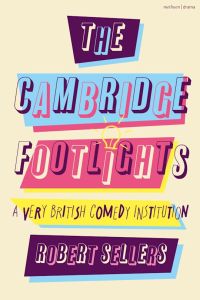
Robert Sellers’The Cambridge Footlights: A Very British Comedy Institution has landed with strong coverage across comedy, culture and literary review pages.
Unseen Histories included it in its “New History Books for January 2026” round-up ahead of publication on 22 January 2026 by Methuen Drama / Bloomsbury.
Chortle reviewed the book on 23 January 2026, calling the Footlights’ cultural legacy “unrivalled” and highlighting its extraordinary alumni network across British comedy.
Tatler ran an edited extract by Robert on 30 January 2026, spotlighting Cecil Beaton and Norman Hartnell’s early Footlights stardom.
The coverage has continued beyond publication, with LouReviews reviewing the book on 18 March 2026, calling it “eminently readable”, and Literary Review running Joe Moran’s review, “Where Fry Met Laurie”, in its February 2026 issue.
The Cambridge News has also covered the Footlights story with an interview about its cultural legacy.
The late Carole Latimer’s memoir Anything But A Still Life had a lovely moment in The Times, with Bianca Schofield remembering her extraordinary life behind the lens: from film publicity and a formative encounter with Eve Arnold to a career photographing some of the biggest names in film, music and theatre.
Published on 19 March, the book stands as a final portrait of a woman who quietly built a remarkable career in a world still overwhelmingly dominated by men.
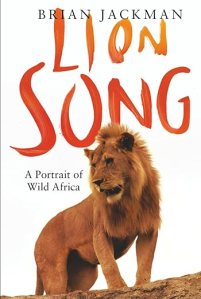
Brian Jackman’s Lion Song: A Portrait of Wild Africa has picked up strong travel and wildlife coverage around publication. The Times ran a major Chris Haslam interview, “I’ve been a safari expert for 50 years. Here’s how Africa has changed”, reflecting on Brian’s half-century of African travel, safari writing and conservation witness.
Travel Africa also ran a substantial interview, “Master Story Teller”, ahead of the book’s March publication, with Sue Watt describing Brian’s five decades of writing about Africa and wildlife conservation.
Deskbound Traveller featured Lion Song on 6 March 2026 under the headline “How eco-tourism saved wild Africa”, positioning the book as both a love letter to Africa and a call to protect its remaining wild places.
Finally, Daniel Stables continues to build his reputation as one of the sharpest travel writers working today. His National Geographic Traveller feature, “From kasbahs to couscous – how Sicily has celebrated its diversity through the centuries”, won at the Inspire Global Media Awards 2026.
He has also had a busy spring in National Geographic Traveller, with recent pieces on fire-walking monks in Tokyo, Norway’s Vesterålen archipelago, outdoor life in Norway, Japanese sports, Iceland’s Reykjanes Peninsula and Shakespeare’s Stratford.
Photography in the twentieth century was overwhelmingly a man’s world. Film sets, press junkets and celebrity portrait studios were dominated by male photographers with heavy cameras and bigger reputations. Yet from the mid-1960s onwards, Carole Latimer quietly built a remarkable career photographing some of the most recognisable figures in film, music and theatre.
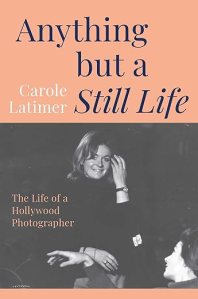
Her memoir, Anything But a Still Life, published posthumously by Unicorn with a foreword by Julian Fellowes, tells the story of how she did it.
Carole was born in 1942 into a theatrical family. Her parents, Hugh and Sheila Latimer, were both actors, and she grew up in Hampstead surrounded by the cultural life of London. Her early career, however, was not behind the camera but in film publicity. It was during this period that chance intervened in a way that would alter the course of her life.
While working on the Austrian set of John Huston’s film A Walk With Love and Death, she began casually taking photographs. The legendary photographer Eve Arnold – the first woman to join Magnum Photos – noticed her and encouraged her to pursue photography professionally. That moment of encouragement proved decisive.
John Huston on the set of A Walk With Love and Death [Carole Latimer]Carole’s first assignment came in 1967 at a party at the Hyde Park Hilton for the band Grapefruit. The room was full of pop stars, including members of the Beatles. Nervous but determined, she moved through the crowd taking photographs, hoping she had remembered the technical instructions she had been given. Among the images she captured that evening was a photograph of John Lennon – the beginning of a career that would span decades.
Over the following years Latimer photographed many of the cultural figures who defined their eras. Her subjects ranged from Barry Manilow in the 1970s to Billy Connolly and Bob Geldof in the 1980s, and later Rachel Weisz and Kim Cattrall. Yet what made her work distinctive was not simply the calibre of the people she photographed, but the intimacy she achieved with them.
Friends often remarked on her instinctive understanding of character. She had a rare ability to put people at ease and to sense what lay beneath the surface of a public persona. As her friend, the author and actress Elizabeth Sharkey, observed in an article about Carole published in The Times:
“She could read someone’s spirit as soon as they walked in the door. She knew how to bring out what was inside of them.”
Sharkey met Latimer in 2001 when Carole photographed her headshots, and the remark captures something essential about Latimer’s work. Many photographers could capture a likeness. Far fewer could reveal something of the inner life of their subjects.
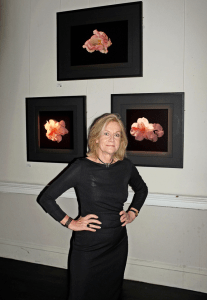
Latimer at her Flowers, Mirroring the Deep exhibition in 2011 [Richard Young/Shutterstock]This quality meant that many of Latimer’s most memorable photographs were taken not in studios but in private settings. One of her most ambitious projects involved photographing notable figures in their gardens – an idea based on the belief that the spaces people cultivate reveal something essential about their inner lives.
It was this project that led to one of the most memorable encounters described in the memoir: her long pursuit of Katharine Hepburn.
After writing to the actress and receiving a polite refusal, Latimer tried again two years later when she happened to be in New York. What followed was a curious ritual. Each morning she called Hepburn at nine o’clock, as instructed. Each morning the actress answered, only to say “Call me at nine tomorrow” before hanging up. The routine continued for three weeks.
Eventually the invitation came.
When the long-awaited meeting finally took place, the shoot itself lasted only minutes. Hepburn suddenly suggested carrying logs across the garden. As she lifted them, her characteristic tremor briefly stopped – and Latimer knew she had captured the moment. It had taken two years of persistence to reach that five-minute window.
Stories like this run throughout Anything But a Still Life. The memoir is filled with encounters that reveal both the glamour and the unpredictability of working close to cultural icons. John Huston teasing the young publicist on set. Dirk Bogarde welcoming her into his house in the south of France during the Cannes Film Festival. Long conversations over tea that slowly dissolved the formal distance between photographer and subject.
What emerges from these recollections is not simply a record of famous personalities, but a portrait of an extraordinary working life.
Carole Latimer never married and had no children. Photography was her central passion, and she pursued it with intensity and independence for more than five decades. Her work took her into private homes, onto film sets and into fleeting moments where public figures briefly relaxed their guard.
The result is a body of work that captures something rare – not just celebrity, but the human presence behind it.
Anything But a Still Life is therefore more than a memoir about photography. It is the story of curiosity, persistence and the unexpected opportunities that shape a life behind the camera.
And, fittingly for someone who spent her career capturing other people’s stories, it also serves as the final portrait of Carole Latimer herself.
Farewell to Russia is a book about independence. It contains what are essentially 15 coming-of-age stories, charting the journeys of the countries that were born from the ashes of the USSR in 1991.
I spent a large part of the mid-2010s engaging in arguments about independence. In 2014, it was Scotland and the Donbas republics; the subsequent years saw Greece’s aborted attempt to leave the Euro, followed by our own EU vote in Britain. In 2017 Catalonia made its bid to go it alone, while 2019 saw the twilight hours of democratic Hong Kong.
I was based in Beijing for the latter events and was surprised to find even the most liberal Chinese describing the peaceful protests of Hong Kongers as acts of dangerous extremism, playing with fire by threatening to split the country.
Before Beijing I had been based in Moscow, and I would often discuss Russia with my Chinese friends. In China, the breakup of the USSR is viewed as a tragedy, the general consensus being that the Russian communists had been weak in letting their country collapse. In the words of Xi Jinping, “no-one was man enough to stand up and resist”.
So, was the breakup of the USSR a good thing? I wanted to write a book about that one day.
False Starts
Despite my chequered travel history, I should probably note here that I am not a spy. Even so, bad things to tend to happen to His Majesty’s foes if I stay in their countries long enough.
In China it was Covid. As I joined the stampede out of the country in January 2020, it struck me that this would be an excellent time to begin the post-Soviet project that had been forming in the back of my mind. I would whizz round the former USSR in 2020, writing it up in 2021 in time for the 30th anniversary of independence.
But the pandemic saw to it that I only made it as far as Poland. Unable to do any actual travelling, I scaled down my ambitions and set about writing a novel set in Moscow instead.
I returned to Russia in February 2022, wanting to add the final flourishes to the novel before beginning the USSR project. But, sure enough, another bad thing happened. Within three weeks of my arrival, Russia had invaded Ukraine.
I’ve spent parts of this war in both Moscow and Kyiv. In each I felt the same suffocating sense of paranoia. Life seemingly went on as normal, but behind the veneer of your average weekday was the ever-present threat that your world could collapse at any moment.
In Moscow it was the psychological pressure that ratcheted up. Flights abroad started to get cancelled, credit cards stopped working, and we half-jokingly voiced our fears that the KGB might snatch foreigners from their beds in the middle of the night. Then an American basketball player was arrested on spurious charges of drug possession at Moscow airport. Suddenly that joke wasn’t funny anymore.
Amir Timur and the Hotel Uzbekistan
I flew to Yerevan and felt an almost physical sense of relief upon being out of Russia. In my exuberance, I proceeded to get immediately blottoed in a brilliant establishment called Beatles Pub. This ended predictably well. I came back to the hotel and cracked my head open after tripping over my own suitcase.
As I recuperated, I realised that inadvertently, the book project had already begun. What with a war and a hospital visit, I grimly observed that I had a chapter or so in the bag. All that remained was the small matter of going to thirteen more countries, many of which were crackpot dictatorships, and one of which was in the midst of an invasion.
The Research
The travel practicalities generally boiled down to three things: 1) funding, 2) sources 3) route planning.
The first was reasonably simple. I was teaching Chinese students on most days. This was practical, although it did rather limit the more adventurous travel options. With students expecting regular classes, a journey over the Caspian Sea, a trek through the Pamir mountains or a sortie to the Donbas frontlines would have been difficult to justify to an ambitious Chinese mother who wants her son to pass his IELTS exam. However, teaching did provide me with time, I didn’t need to be back for anything and so could go about my intelligence gathering in a reasonably unhurried manner.
But how to gather that intelligence? How do you canvass local opinion when you’re not particularly well-connected?
There are always some trusty standbys: hitchhiking; haircuts; market-stall holders; passengers on long-distance trains, and, of course, bars. The fact that this book has been described by one critic as “a remarkable feat of drinking”, is testament to how seriously I took this research.
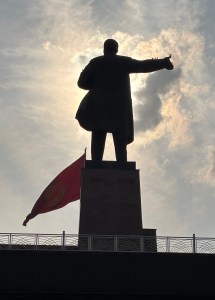
Lenin faces the setting sun. Osh, Kyrgyzstan
Cut-price guided tours at museums and running clubs were another unexpected boon. I made a particular effort to get outside each country’s capital, where the people were friendlier and the experience of independence was often radically different. All of the above usually provided a decent mosaic from which to work.
Certain people are overrepresented in the book – English and Russian speakers, of course – but also those prepared to talk to a foreign stranger, or stop their car to give him a lift, or those who respond to unsolicited messages asking for an interview. Generous people, in other words.
And I’m glad that the generous are well-represented. Having read so many books about the USSR, I find that there’s often a lot of portentousness, a lot of bullets in the back of the head, and the sense of a people battered this way and that by the great forces of history. What many miss are the ordinary individuals: hardworking, hard-partying and hilariously droll, with huge hearts and dark, sledgehammer wit.
The Writing
There are many books on how to write so I won’t waste too much time reflecting on it. To the extent that anything “worked” for me, every distraction has to go: social media; your love interests; your alcohol intake; your joy. Guard your time jealously. Meal prep for the week. Go running to clear your head.
If you’re still to find an agent or publisher, don’t read the work of your peers. Any positive ideas that you might get from them will be more than offset by the raging jealousy.
In London, the British Library and the National Archives at Kew are wonderful free places to write. There were good days when I would come home with a warm glow inside. But for the most part it is miserable and lonely. Aspiring authors be warned: you will get rejected, and you will suffer.
What worked for me was embracing the suffering. Seeing the work as an enormous, ugly lump of rock that you have to slowly chisel to perfection.
For non-fiction writers – get in touch with others in the field and interview them for the book. As a debut author, I found this intimidating at first, but many experts enjoyed the fact I got in touch. Prepare well for these calls, they’ll not only give you ideas to improve your work, they’ll provide an enormous release when you realise that others share your interest.
Coming through the process of writing a book, you’ll find that you have more empathy; you’ll be slower to criticise other artists’ work; you’ll spend more money on books, independent films and other creative endeavours; you’ll likely help out people in the same position; and you’ll be a stronger person for not having given up.
In 2005, I was finishing up a term as a clerk for the Missouri Court of Appeals. I needed not only a job but a mentor. I learned an older attorney with an established practice was looking for someone to take over his business. He specialized in probate and estate planning, something I knew little about. But I was throwing out a wide net so I faxed in a resume.
Then I got a phone call.
“This is Rolland Comstock,” the smoke-engraved voice said on the other line. “I see you went to law school in Lawrence, Kansas.”
“That’s right.” I braced myself for the usual abuse I took for going to the historic rival of our state’s flagship institution.
“Tell me, who is the most famous author from there.”
Was this guy for real, I thought. But these kind of weird trivia questions were sort of my thing.
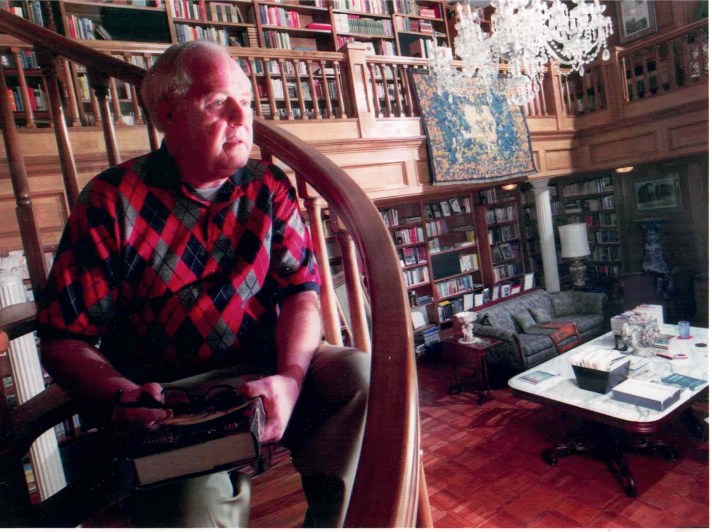
Book Collector Rolland Comstock in his library
“Well, there’s Langston Hughes but he’s a poet. So I am going to say William Burroughs.” (The legendary beat author moved to the college town in his old age and the place became a Mecca for people like Kurt Cobain and Michael Stipe to visit and pay homage.)
I heard an exhalation of nicotine from the other end. “Yes, yes. That’s very good.”
Thus, started my relationship with Comstock. I learned, quickly, he wasn’t just any lawyer. He was also a renowned book collector who had been featured in “The Washington Post” and “The London Times” for his obsessive efforts. He had built a three-story library onto his home with chandeliers and rolling ladders. Dead authors at the top; living on the first level. He lived with a pack of hybrid wolves who trailed my every move and bit at my fingers.
While I loved the idea of working for him – we would talk about art-house movies rather than cases– the experience was dysfunctional. He was going through a divorce and the dispute over their house consumed his life. Rolland never came to the office so I never received any guidance. Plus, his money went to fueling the lawsuits with his ex-wife with little left to pay employees.
I lasted barely over a year. Rolland was murdered a few months later after I left.
My new firm took over his practice and I ended up getting to know his daughter, Faith. She hired our firm to represent her when she sued her mother in civil court for Rolland’s death. While no criminal charges ever got filed, a jury ended up saying his former wife of 38 years pulled the trigger that killed him.
I would tell the story of this eccentric lawyer and people would say it sounded too crazy to be true. That someone should write a book not only about the murder but about Rolland’s unusual life.
Yes, I would think. Someone should write a book about this.
The book is out now and published by Post Hill Press.
On the hundredth anniversary of Henry Moseley‘s death, in 2015, a flurry of history podcasts came out about his life and legacy. Because of my physics degree, I was familiar with the broad strokes: he was a brilliant young British atomic physicist, considered a shoo-in for the Nobel prize for his work on nuclear charge. He volunteered for service in World War One and lost his life to a sniper’s bullet at Gallipoli.
I listened to the podcasts with interest. I’d always been fascinated by Moseley’s tragic story as a cautionary tale about the dangers of conformity to societal expectations, particularly as they relate to gender. Although he could have been infinitely more useful to the war effort as a scientist (for example, his mentor Sir Ernest Rutherford put his skills to work developing anti-submarine acoustic technology), Moseley instead signed on as a soldier, insisting that as an able-bodied man it was his duty to be exposed to the dangers of combat. As a result, perhaps the finest scientific mind of his generation was snuffed out before he reached his 28th birthday.
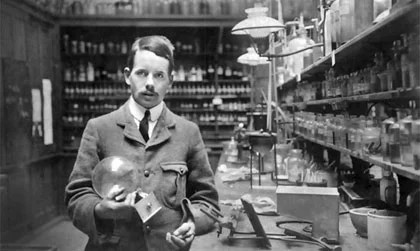
Henry Moseley [Photograph: Balliol-Trinity College Laboratory, 1910]
The podcasts also revealed a fresh detail about Moseley. Just before departing for the war, he had written his mother a letter, saying that he would soon be sending her a scientific notebook, adding “I value it highly”. This notebook, the podcasts told me, had subsequently vanished.
My first thought was that this sounded like the premise of exactly the kind of novel I enjoy reading: an historical mystery with high stakes and the potential for international intrigue and skulduggery. My second thought was that somebody MUST have already written it.
When I discovered that no fictionalised version of Henry Moseley’s life existed, I began to imagine what the plot of such a story would look like. A notebook belonging to a brilliant atomic physicist had gone missing. What secrets might it have contained? Who would have been interested in acquiring these secrets? And how did the notebook disappear?
I kept my wife apprised of the progress of my imaginary novel as the plot gradually took shape in my head. Liz, herself a writer, encouraged me to write the thing, but no, I was only playing with ideas. Writing novels was something that other people did, and anyway, a novel was a huge undertaking. Who has that sort of time?
Several months passed, during which I continued to “play” with the plot of my never-to-be-written novel. I also read up on such diverse topics as conscientious objectors during World War One, the history of policing in the UK, atomic physics, and, oddly enough, whippet racing.
Eventually, it became clear to me that I was no longer simply playing at writing a novel. I’d created a workable outline and done extensive research. All that remained was to begin actually putting words on the page. I sat at my computer, took a deep breath, and started typing.
The journey from blank page to publication has not been a short one. What with writing, researching, and seemingly endless revisions, it has been a much longer road than I’d naively expected when I first started. For me, though, the time and the effort have been worthwhile. I hope that readers of Timebomb will feel the same way.
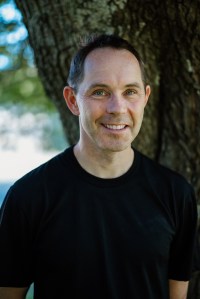
Kevin Bartlett was born in Colchester. He lives in Victoria, Canada, with his wife. He has degrees in both history and physics. He has lived in the United Kingdom, France, Germany, Japan, and the United States, working at particle accelerators, an astronomical observatory, and as a scientific fisheries observer.
Quadrille, an imprint of Penguin Random House, has acquired A Guide to Drinking in Venice by drinks journalist and A Lush Life Manual founder Susan L. Schwartz, a love letter to the city’s bar culture that blends neighbourhood-by-neighbourhood discovery with cocktail history and practical recommendations.
The illustrated hardback takes readers through Venice’s classic bars, historic wine bars and cafés, spotlighting 50+ addresses alongside 20 cocktail recipes shared by some of the city’s best-known venues, plus local tips for drinking like a Venetian.
Since its foundation in the year 421 AD, Venice has perfected the art of living well. Its merchants brought back seductive wines, explorers wrote of invigorating drinks, and visitors added their own traditions. All the ingredients for a great cocktail.
This is the perfect companion for those who appreciate the art of a great drink, and anyone looking to experience the intoxicating charm of Venice.
Susan said, “A Guide to Drinking in Venice is my love letter to the bars, cafés and characters who keep the city’s drinking culture alive — from morning espresso to late-night cocktails. I hope it gives readers that same insider’s access, capturing the people, places and traditions that make this city one of the world’s great drinking destinations.”
Julian Fellowes, a longtime friend and visitor to Venice, provides a foreword. Photos are by award-winning photographer Hugh Johnson.
A Guide to Drinking in Venice will be published by Quadrille, Penguin Random House.on April 16, 2026 in the UK and April 21, 2026 in the USA and will be available in print and digital formats.
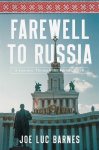 Ahead of its US publication in October, Joe Luc Barnes’s Farewell to Russia: A Journey Through the Former USSR has attracted strong US trade attention. Foreword Reviews called it an “epic and revealing travel memoir”, while Library Journal praised it as “an enthralling and insightful travel memoir of the former Soviet Union”. Closer to home, Joe has continued a busy programme of events and appearances, including a discussion for the Royal Society for Asian Affairs exploring his journey through the fifteen former Soviet republics and the changing relationship between Russia and its neighbours.
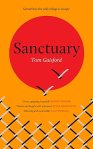 Tom Gaisford’s novel Sanctuary has received terrific endorsements from both The Secret Barrister, who calls it “a triumph” and “compellingly written and bursting with humanity”, and bestselling novelist Chris Cleave, who says: “Everyone should read this furious defence of the voiceless.” The novel explores Britain’s asylum system through the intertwined stories of a young barrister and an Iranian refugee.
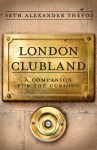 Historian Seth Thévoz joined the long-running I Hear of Sherlock Everywhere podcast for a dedicated discussion of London Clubland, exploring the history, rituals and hidden influence of London’s private members’ clubs. Seth has also continued his regular appearances on The Bunker, bringing his expertise to discussions of British politics, international affairs and political finance.
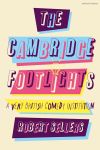 Robert Sellers’s The Cambridge Footlights: From Revue to Revolution continues to attract praise, including selection as a Book of the Month by Best of British. The definitive history of the legendary comedy institution has also attracted coverage and reviews from the Mail on Sunday, Literary Review, Chortle and LouReviews.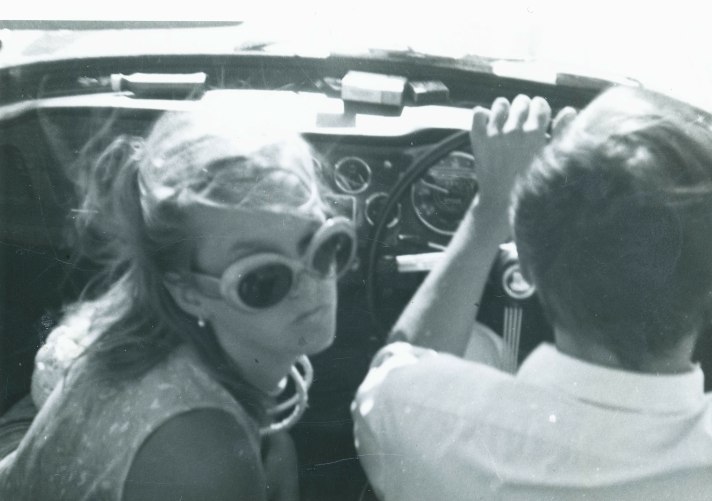
 And so the novel began to take shape. I would write a few chapters and send them to Juliet who would read them and comment, particularly on the authenticity, because one of our main concerns was that this did reflect her experience in a real way. It was interesting and a fine line to tread.
  Gold has a powerful hold over our civilization. The precious metal first attracted the Spanish conquistadors to the new world. For the Incas, only royalty could wear gold. Louis XIV covered Versailles from floor to ceiling in gold. It is excess, wealth, domination and power.
 Dan Collyns is an award-winning multimedia journalist covering Latin America based in Lima, Peru. He reports on everything from food to freedom of speech but specializes in the environment, development, and human rights. He has been reporting for The Guardian for more than a decade from Peru and the region, as well as for the BBC, CGTN America, the Thomson Reuters Foundation (TRF), and Mongabay, among others.
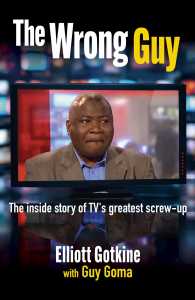 Elliott Gotkine’s The Wrong Guy has had a terrific launch and anniversary burst, with national press, international syndication, television, radio, podcasts and viral coverage all revisiting the extraordinary Guy Goma BBC mix-up twenty years on.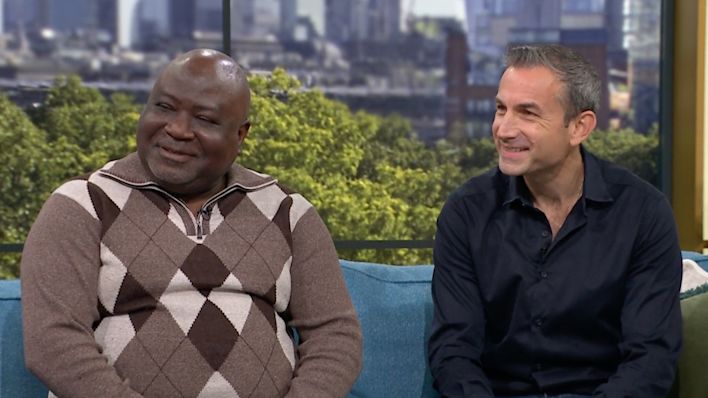
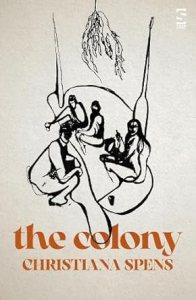 Christiana Spens’ The Colony is beginning to gather exactly the sort of literary and cultural attention it deserves ahead of publication by Salt. It is a dark, stylish and unsettling novel about wellness culture, escape fantasies, toxic intimacy and the dangerous appeal of surrendering yourself to someone else’s vision of freedom.
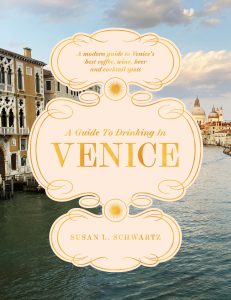 Susan L. Schwartz’s A Guide to Drinking in Venice is off to a lovely start, with national press, launch activity and festival attention around the book. The Independent ran Susan’s piece, “From the Bellini to the Spritz – how these Venice classics became the drinks of summer”, drawing directly on the stories behind A Guide to Drinking in Venice and the city’s extraordinary drinking culture.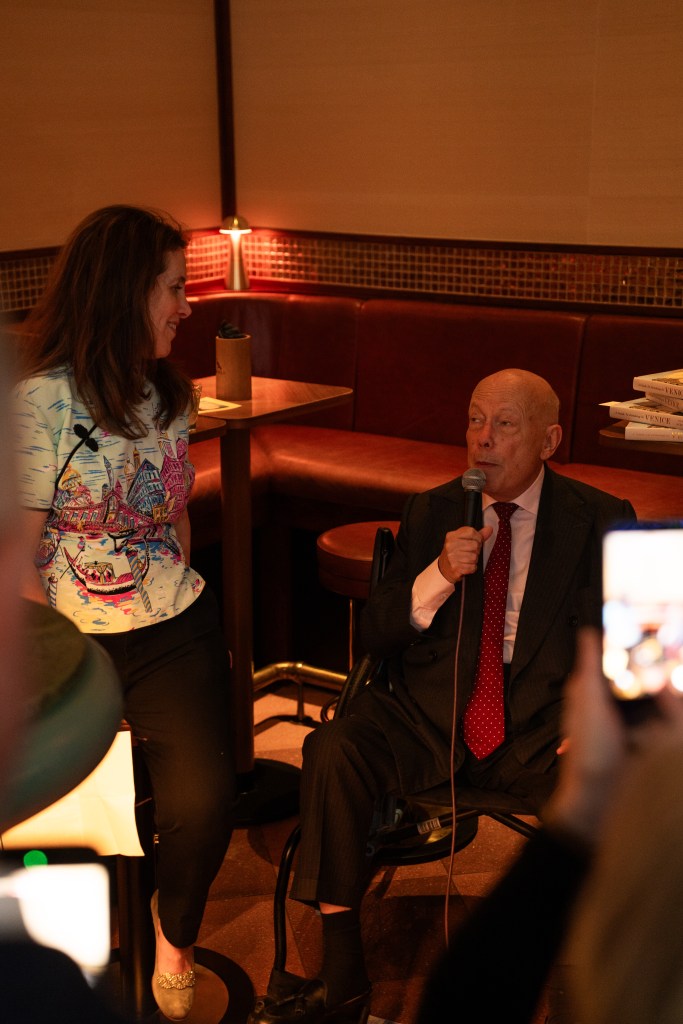
 James Owen’s debut true-crime book

 Brian Jackman’s Lion Song: A Portrait of Wild Africa has picked up strong travel and wildlife coverage around publication. The Times ran a major Chris Haslam interview, “I’ve been a safari expert for 50 years. Here’s how Africa has changed”, reflecting on Brian’s half-century of African travel, safari writing and conservation witness.
 Carole Latimer never married and had no children. Photography was her central passion, and she pursued it with intensity and independence for more than five decades. Her work took her into private homes, onto film sets and into fleeting moments where public figures briefly relaxed their guard.
 Despite my chequered travel history, I should probably note here that I am not a spy. Even so, bad things to tend to happen to His Majesty’s foes if I stay in their countries long enough.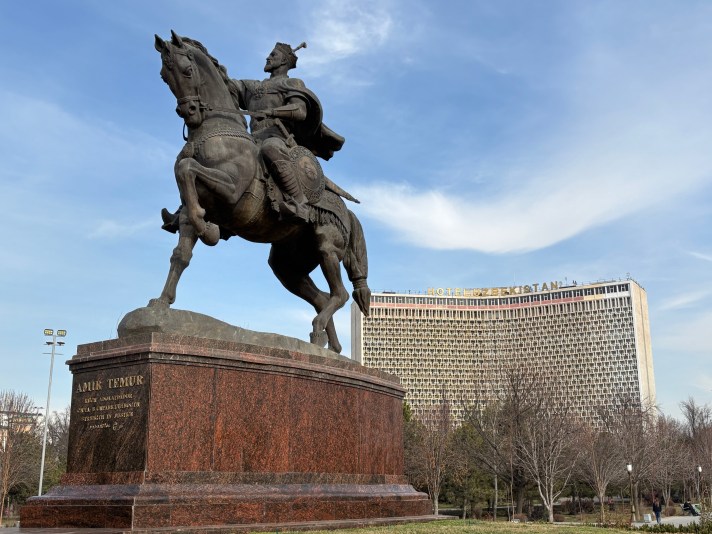
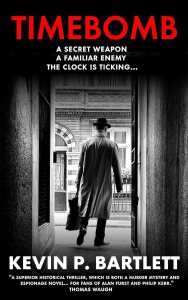
 ‘A superior historical thriller, which is both a murder mystery and espionage novel…for fans of Alan Furst and Philip Kerr.‘ – Thomas Waugh