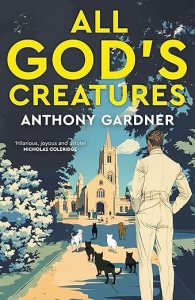
All God’s Creatures is not a book I intended to write. It’s a prequel to my novel Fox, published in 2016, which at the time seemed complete in itself. Gradually, however, events got the better of me.
 Fox was a satirical thriller about urban foxhunting and Chinese spies which proved weirdly prescient, since it involved a mass-surveillance system developed in Beijing and a virus whose spread the government was struggling to control. A minor strand focused on a militant religious movement called All God’s Creatures, which held that animals should be allowed to receive Holy Communion. The disruption it caused allowed the Prime Minister – under pressure from the Beijing government – to threaten the mass closure of churches unless the Archbishop of Canterbury denounced an underground Christian movement in China.
I gave little thought to All God’s Creatures over the next few years. But as the forces of political correctness gathered, I couldn’t help seeing parallels with some of the new movements that were sweeping the world. Suppose the All God’s Creatures creed actually was widely accepted and anyone who disagreed with it was cancelled: how, I wondered, might that come about? So I set to work on the story of Ben Fairweather, the editor of a religious magazine called Cathedral which is taken over by All God’s Creatures. As a result, Ben finds himself thrown into a world of Russian spies, art forgery and murder.
Ben’s experiences were based partly on my own. Like him, I’d worked on magazines turned upside down by mad directives from above. Like him, I’d mourned the death of a dog and speculated on whether animals go to heaven – the inspiration for a Cathedral article which draws the attention of predatory forces. And though, unlike him, I lack the skill to pursue a second career as a nightclub pianist, it’s something I’ve occasionally fantasised about.
 In its original form All God’s Creatures was – at 39,000 words – very short: too short. How could I make it more substantial? As the plot involved a forged painting, I hit on the idea of a back story for it: who had painted it and why. It happened that my wife and I had made several visits to St Ives so that she could study at its art school; while we were there, a local friend mentioned that people in witness-protection schemes were often settled in Cornwall because it was so far from London. So Kevin Murphy, a former gang member who discovers a gift for painting, joined the cast of characters. Weaving his story into the existing narrative was far from easy, but added to the richness of the novel.
Satire, like much of fiction, is a way of taking revenge on an unsatisfactory world, and in writing it I’m spurred on by things that annoy me. The targets in All God’s Creatures include Russian oligarchs, art curators and pretentious language. The novel’s main purpose, however, was to explore the way that fanatics can take reasonable ideas and push them to insane extremes. I hope that readers will find it thought-provoking as well as funny and exciting.
 Tim Bird appeared live on Times Radio about his debut book Happy Land: Finding My Inner Finn (Eye Books).
 James Owen wrote an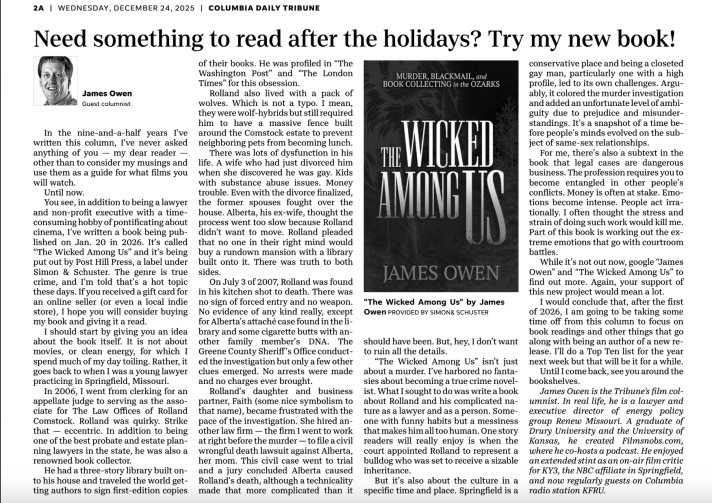
 Finally, Joe Luc Barnes wrote ‘
 When Joshua sought therapy for his panic attacks and eating disorder, he assumed they stemmed from a traumatic breakup or the grief of losing a friend. To his surprise, a therapist suggested another factor — transgenerational trauma – the idea that trauma can cascade through the generations, almost like an unwanted inheritance. The process can take place through parenting behaviours, cultural factors, or possibly even genetics.
 Joshua launched his career at LBC, later freelancing with prestigious outlets such as the BBC, The Telegraph, Wired, The Spectator, and The Times, among many others. He is now the is a
 I had been going with the clunkier and far less poetic Season Ticket, until Michael suggested I ‘drop the Ticket.’ Sometimes, in football, you know a shot is going in as soon as it leaves the striker’s boot, and this suggestion had the same feeling about it. In that moment, Season was born, and I knew then that I was on to a winner.
 Some places feel like home even if you’ve never been there before. Buenos Aires was like that for me. I arrived at the end of my first visit to South America, a life-shifting backpacking trip through Brazil, Bolivia, Peru, Chile and Argentina after giving up a job as a news and sports reporter for the Evening Standard. In some sense, part of me never left the city.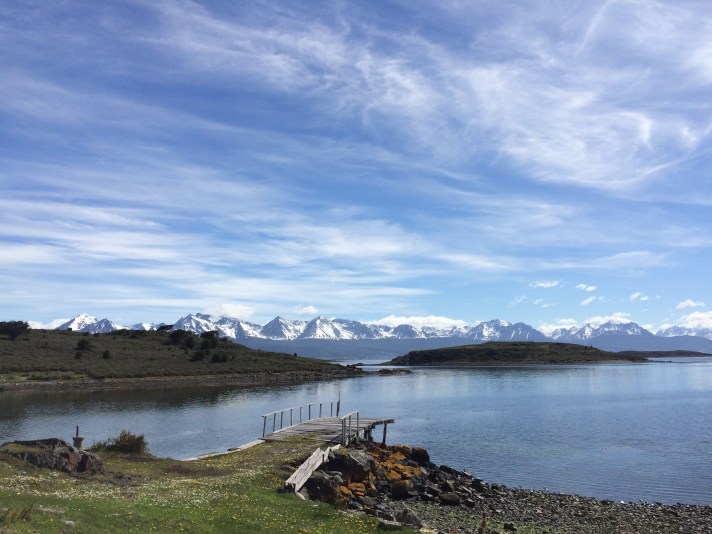
 As I travelled across Bolivia to research my first book,
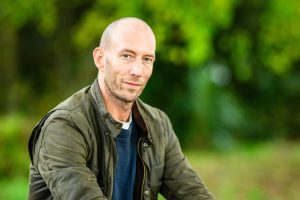 Long before Sanctuary was published, I worked in immigration and asylum law at a top-ranked firm in Tottenham. There, I developed an indignant, sometimes self-righteous disdain for our government’s treatment of vulnerable migrants and asylum seekers. If we are the protagonists of our own lives, the Home Office was my antagonist. We fought them day in, day out on our clients’ behalf, essentially to protect basic human rights. It was rewarding, while also gruelling.
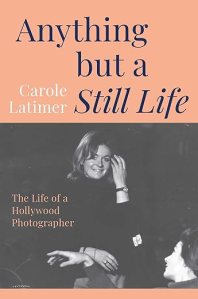 Following the recent sad death of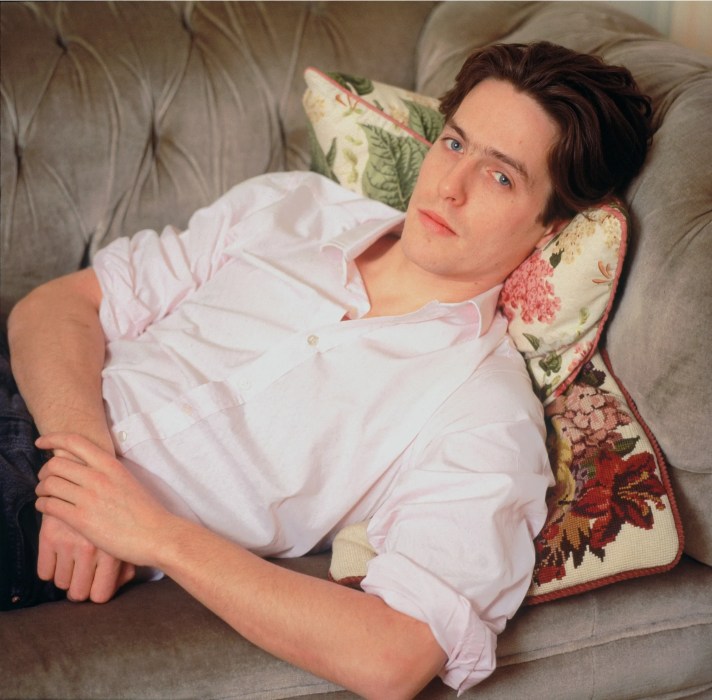
 Continuing the theme of travel, Daniel Stables’s article for the National Geographic Traveller,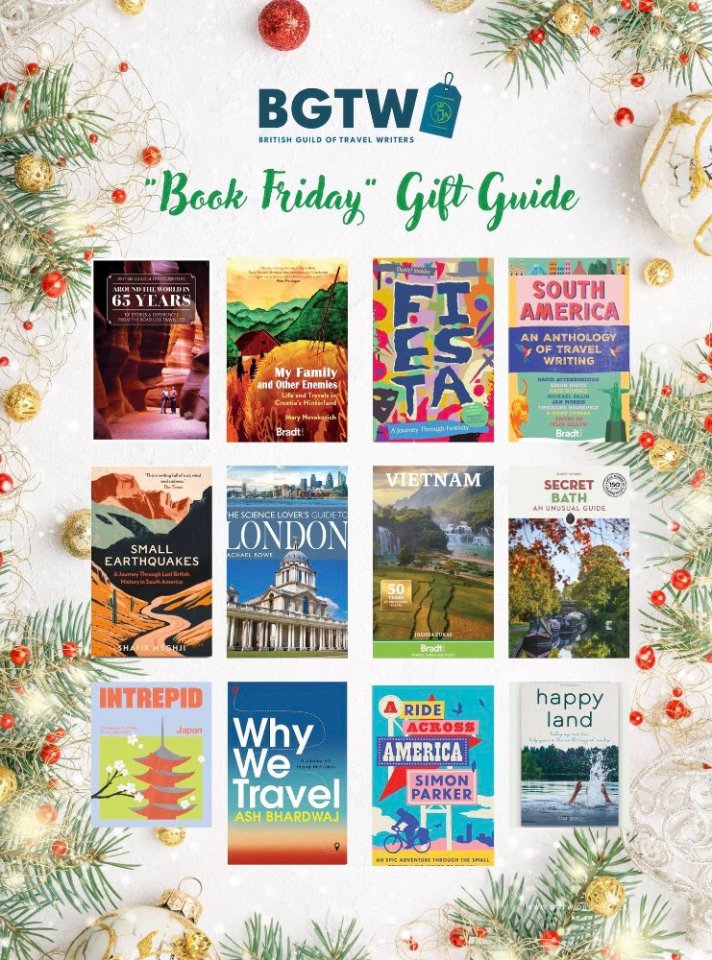

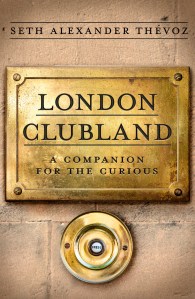 We start with Seth Thevoz, whose work continues to rattle the crockery in Westminster. An archived extract doing the rounds captures his characteristic mix of archival ferreting and wry prose, reminding readers why his investigations travel so well beyond the committee room
 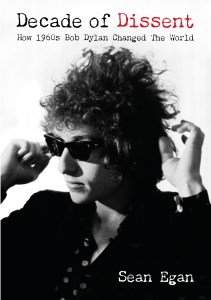 In music and mythmaking, Sean Egan’s Decade of Dissent has drawn nods from both niche and mainstream outlets. All About The Rock spotlighted the book’s case that 1960s Dylan changed more than just chord progressions
  And then there is Tim Willasey-Wilsey, everywhere at once. Reviews have been generous, from The Telegraph’s take on The Spy and the Devil
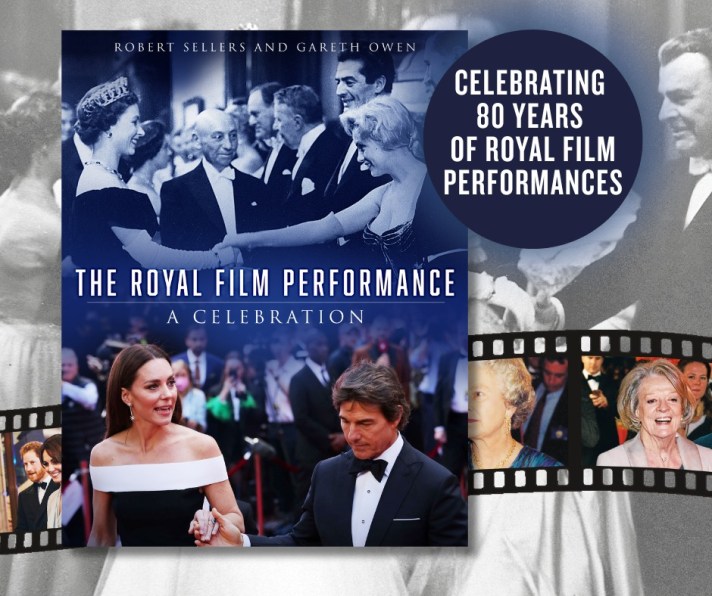
 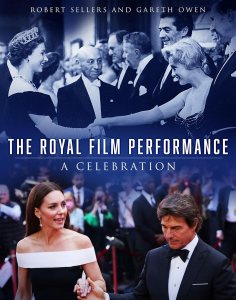 For nearly eight decades, the Royal family has been gracing the red carpet to see the most eagerly anticipated film of the year. Since 1946, the Royal Film Performance has been an annual highlight of the entertainment social calendar, where cinema’s most famous icons have come face to face with royalty.