
Farewell to Russia is a book about independence. It contains what are essentially 15 coming-of-age stories, charting the journeys of the countries that were born from the ashes of the USSR in 1991.
I spent a large part of the mid-2010s engaging in arguments about independence. In 2014, it was Scotland and the Donbas republics; the subsequent years saw Greece’s aborted attempt to leave the Euro, followed by our own EU vote in Britain. In 2017 Catalonia made its bid to go it alone, while 2019 saw the twilight hours of democratic Hong Kong.
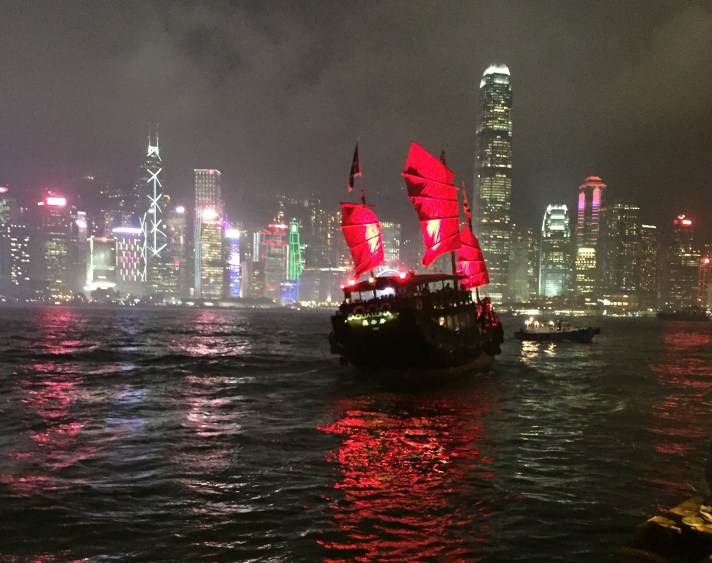
I was based in Beijing for the latter events and was surprised to find even the most liberal Chinese describing the peaceful protests of Hong Kongers as acts of dangerous extremism, playing with fire by threatening to split the country.
Before Beijing I had been based in Moscow, and I would often discuss Russia with my Chinese friends. In China, the breakup of the USSR is viewed as a tragedy, the general consensus being that the Russian communists had been weak in letting their country collapse. In the words of Xi Jinping, “no-one was man enough to stand up and resist”.
So, was the breakup of the USSR a good thing? I wanted to write a book about that one day.
False Starts
 Despite my chequered travel history, I should probably note here that I am not a spy. Even so, bad things to tend to happen to His Majesty’s foes if I stay in their countries long enough.
In China it was Covid. As I joined the stampede out of the country in January 2020, it struck me that this would be an excellent time to begin the post-Soviet project that had been forming in the back of my mind. I would whizz round the former USSR in 2020, writing it up in 2021 in time for the 30th anniversary of independence.
But the pandemic saw to it that I only made it as far as Poland. Unable to do any actual travelling, I scaled down my ambitions and set about writing a novel set in Moscow instead.
I returned to Russia in February 2022, wanting to add the final flourishes to the novel before beginning the USSR project. But, sure enough, another bad thing happened. Within three weeks of my arrival, Russia had invaded Ukraine.
I’ve spent parts of this war in both Moscow and Kyiv. In each I felt the same suffocating sense of paranoia. Life seemingly went on as normal, but behind the veneer of your average weekday was the ever-present threat that your world could collapse at any moment.
In Moscow it was the psychological pressure that ratcheted up. Flights abroad started to get cancelled, credit cards stopped working, and we half-jokingly voiced our fears that the KGB might snatch foreigners from their beds in the middle of the night. Then an American basketball player was arrested on spurious charges of drug possession at Moscow airport. Suddenly that joke wasn’t funny anymore.
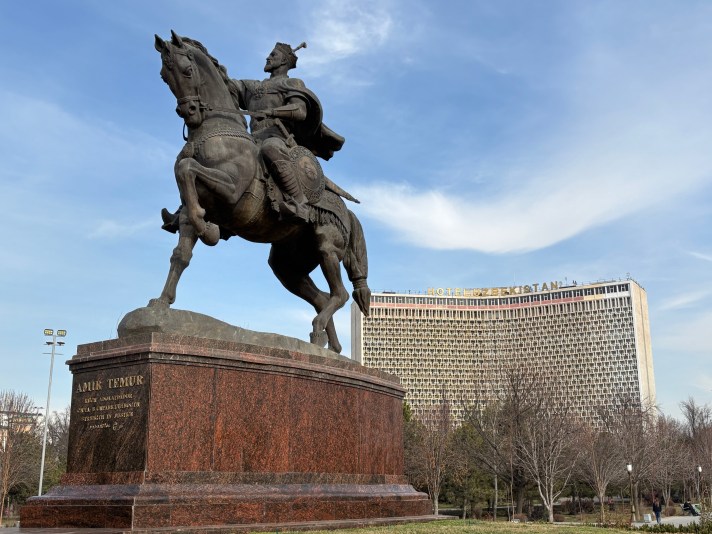
I flew to Yerevan and felt an almost physical sense of relief upon being out of Russia. In my exuberance, I proceeded to get immediately blottoed in a brilliant establishment called Beatles Pub. This ended predictably well. I came back to the hotel and cracked my head open after tripping over my own suitcase.
As I recuperated, I realised that inadvertently, the book project had already begun. What with a war and a hospital visit, I grimly observed that I had a chapter or so in the bag. All that remained was the small matter of going to thirteen more countries, many of which were crackpot dictatorships, and one of which was in the midst of an invasion.
The Research
The travel practicalities generally boiled down to three things: 1) funding, 2) sources 3) route planning.
The first was reasonably simple. I was teaching Chinese students on most days. This was practical, although it did rather limit the more adventurous travel options. With students expecting regular classes, a journey over the Caspian Sea, a trek through the Pamir mountains or a sortie to the Donbas frontlines would have been difficult to justify to an ambitious Chinese mother who wants her son to pass his IELTS exam. However, teaching did provide me with time, I didn’t need to be back for anything and so could go about my intelligence gathering in a reasonably unhurried manner.
But how to gather that intelligence? How do you canvass local opinion when you’re not particularly well-connected?
There are always some trusty standbys: hitchhiking; haircuts; market-stall holders; passengers on long-distance trains, and, of course, bars. The fact that this book has been described by one critic as “a remarkable feat of drinking”, is testament to how seriously I took this research.
Cut-price guided tours at museums and running clubs were another unexpected boon. I made a particular effort to get outside each country’s capital, where the people were friendlier and the experience of independence was often radically different. All of the above usually provided a decent mosaic from which to work.
Certain people are overrepresented in the book – English and Russian speakers, of course – but also those prepared to talk to a foreign stranger, or stop their car to give him a lift, or those who respond to unsolicited messages asking for an interview. Generous people, in other words.
And I’m glad that the generous are well-represented. Having read so many books about the USSR, I find that there’s often a lot of portentousness, a lot of bullets in the back of the head, and the sense of a people battered this way and that by the great forces of history. What many miss are the ordinary individuals: hardworking, hard-partying and hilariously droll, with huge hearts and dark, sledgehammer wit.
The Writing
There are many books on how to write so I won’t waste too much time reflecting on it. To the extent that anything “worked” for me, every distraction has to go: social media; your love interests; your alcohol intake; your joy. Guard your time jealously. Meal prep for the week. Go running to clear your head.
If you’re still to find an agent or publisher, don’t read the work of your peers. Any positive ideas that you might get from them will be more than offset by the raging jealousy.
In London, the British Library and the National Archives at Kew are wonderful free places to write. There were good days when I would come home with a warm glow inside. But for the most part it is miserable and lonely. Aspiring authors be warned: you will get rejected, and you will suffer.
 What worked for me was embracing the suffering. Seeing the work as an enormous, ugly lump of rock that you have to slowly chisel to perfection.
For non-fiction writers – get in touch with others in the field and interview them for the book. As a debut author, I found this intimidating at first, but many experts enjoyed the fact I got in touch. Prepare well for these calls, they’ll not only give you ideas to improve your work, they’ll provide an enormous release when you realise that others share your interest.
Coming through the process of writing a book, you’ll find that you have more empathy; you’ll be slower to criticise other artists’ work; you’ll spend more money on books, independent films and other creative endeavours; you’ll likely help out people in the same position; and you’ll be a stronger person for not having given up.
Farewell to Russia is out now, published by Elliott & Thompson.

 Cull & Co. Literary Agency Ltd