
Photography in the twentieth century was overwhelmingly a man’s world. Film sets, press junkets and celebrity portrait studios were dominated by male photographers with heavy cameras and bigger reputations. Yet from the mid-1960s onwards, Carole Latimer quietly built a remarkable career photographing some of the most recognisable figures in film, music and theatre.
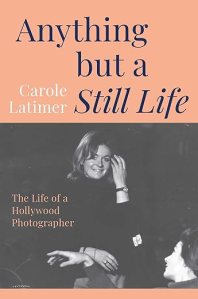
Her memoir, Anything But a Still Life, published posthumously by Unicorn with a foreword by Julian Fellowes, tells the story of how she did it.
Carole was born in 1942 into a theatrical family. Her parents, Hugh and Sheila Latimer, were both actors, and she grew up in Hampstead surrounded by the cultural life of London. Her early career, however, was not behind the camera but in film publicity. It was during this period that chance intervened in a way that would alter the course of her life.
While working on the Austrian set of John Huston’s film A Walk With Love and Death, she began casually taking photographs. The legendary photographer Eve Arnold – the first woman to join Magnum Photos – noticed her and encouraged her to pursue photography professionally. That moment of encouragement proved decisive.
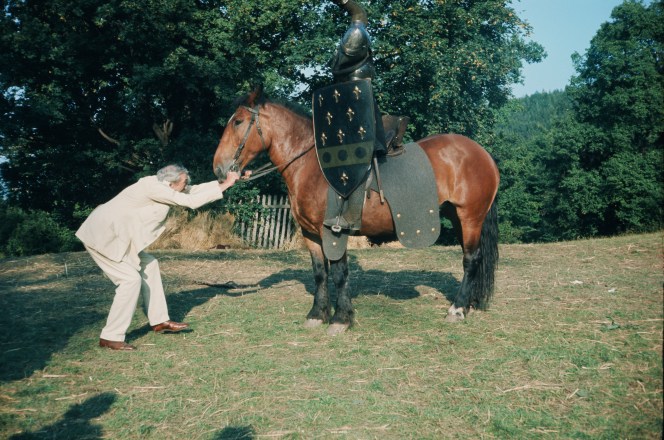
Over the following years Latimer photographed many of the cultural figures who defined their eras. Her subjects ranged from Barry Manilow in the 1970s to Billy Connolly and Bob Geldof in the 1980s, and later Rachel Weisz and Kim Cattrall. Yet what made her work distinctive was not simply the calibre of the people she photographed, but the intimacy she achieved with them.
Friends often remarked on her instinctive understanding of character. She had a rare ability to put people at ease and to sense what lay beneath the surface of a public persona. As her friend, the author and actress Elizabeth Sharkey, observed in an article about Carole published in The Times:
“She could read someone’s spirit as soon as they walked in the door. She knew how to bring out what was inside of them.”
Sharkey met Latimer in 2001 when Carole photographed her headshots, and the remark captures something essential about Latimer’s work. Many photographers could capture a likeness. Far fewer could reveal something of the inner life of their subjects.
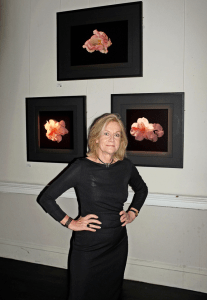
[Richard Young/Shutterstock]
It was this project that led to one of the most memorable encounters described in the memoir: her long pursuit of Katharine Hepburn.
After writing to the actress and receiving a polite refusal, Latimer tried again two years later when she happened to be in New York. What followed was a curious ritual. Each morning she called Hepburn at nine o’clock, as instructed. Each morning the actress answered, only to say “Call me at nine tomorrow” before hanging up. The routine continued for three weeks.
Eventually the invitation came.
When the long-awaited meeting finally took place, the shoot itself lasted only minutes. Hepburn suddenly suggested carrying logs across the garden. As she lifted them, her characteristic tremor briefly stopped – and Latimer knew she had captured the moment. It had taken two years of persistence to reach that five-minute window.
Stories like this run throughout Anything But a Still Life. The memoir is filled with encounters that reveal both the glamour and the unpredictability of working close to cultural icons. John Huston teasing the young publicist on set. Dirk Bogarde welcoming her into his house in the south of France during the Cannes Film Festival. Long conversations over tea that slowly dissolved the formal distance between photographer and subject.
What emerges from these recollections is not simply a record of famous personalities, but a portrait of an extraordinary working life.
 Carole Latimer never married and had no children. Photography was her central passion, and she pursued it with intensity and independence for more than five decades. Her work took her into private homes, onto film sets and into fleeting moments where public figures briefly relaxed their guard.
The result is a body of work that captures something rare – not just celebrity, but the human presence behind it.
Anything But a Still Life is therefore more than a memoir about photography. It is the story of curiosity, persistence and the unexpected opportunities that shape a life behind the camera.
And, fittingly for someone who spent her career capturing other people’s stories, it also serves as the final portrait of Carole Latimer herself.

 Despite my chequered travel history, I should probably note here that I am not a spy. Even so, bad things to tend to happen to His Majesty’s foes if I stay in their countries long enough.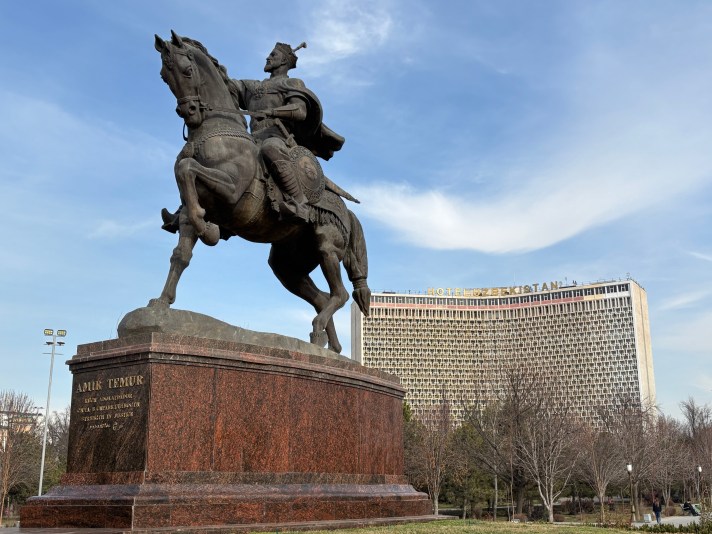
 What worked for me was embracing the suffering. Seeing the work as an enormous, ugly lump of rock that you have to slowly chisel to perfection.

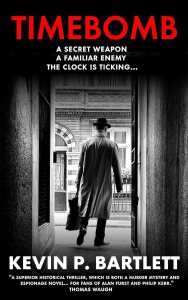
 ‘A superior historical thriller, which is both a murder mystery and espionage novel…for fans of Alan Furst and Philip Kerr.‘ – Thomas Waugh
 Fox was a satirical thriller about urban foxhunting and Chinese spies which proved weirdly prescient, since it involved a mass-surveillance system developed in Beijing and a virus whose spread the government was struggling to control. A minor strand focused on a militant religious movement called All God’s Creatures, which held that animals should be allowed to receive Holy Communion. The disruption it caused allowed the Prime Minister – under pressure from the Beijing government – to threaten the mass closure of churches unless the Archbishop of Canterbury denounced an underground Christian movement in China.
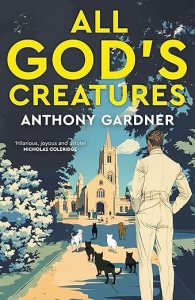 In its original form All God’s Creatures was – at 39,000 words – very short: too short.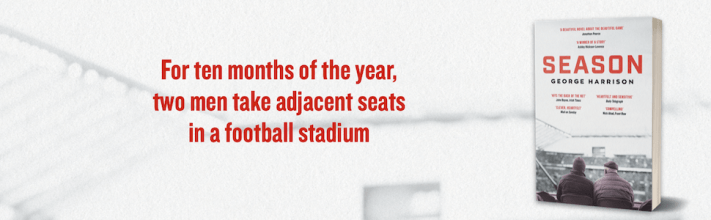
 I had been going with the clunkier and far less poetic Season Ticket, until Michael suggested I ‘drop the Ticket.’ Sometimes, in football, you know a shot is going in as soon as it leaves the striker’s boot, and this suggestion had the same feeling about it. In that moment, Season was born, and I knew then that I was on to a winner.
 Some places feel like home even if you’ve never been there before. Buenos Aires was like that for me. I arrived at the end of my first visit to South America, a life-shifting backpacking trip through Brazil, Bolivia, Peru, Chile and Argentina after giving up a job as a news and sports reporter for the Evening Standard. In some sense, part of me never left the city.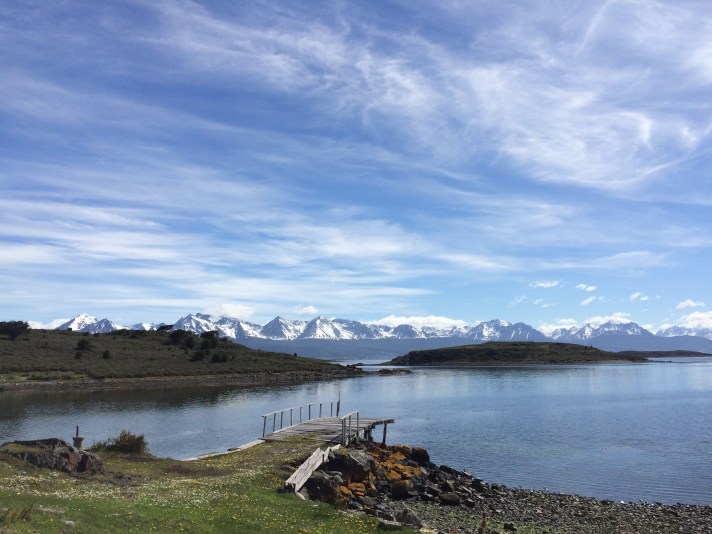
 As I travelled across Bolivia to research my first book,
 Long before Sanctuary was published, I worked in immigration and asylum law at a top-ranked firm in Tottenham. There, I developed an indignant, sometimes self-righteous disdain for our government’s treatment of vulnerable migrants and asylum seekers. If we are the protagonists of our own lives, the Home Office was my antagonist. We fought them day in, day out on our clients’ behalf, essentially to protect basic human rights. It was rewarding, while also gruelling.
 Cull & Co. Literary Agency Ltd