By Angie Sage
THE SPYMASTER’S WIFE began when my cousin, Juliet Clibborn, sent me a few pages of her memories of the early days of her marriage to her husband, John (Clibborn). She and John had had a very interesting and special time together and she wanted to set it all down for her children. But it was not easy to see how to do this.
But when I read the description of how John told Juliet about his ‘real’ job in the SIS, I immediately thought what a wonderful start it was to a novel. I suggested that maybe we could take these series of incidents in their life and turn them into a novel.
And so it began.
Juliet had about a dozen iconic scenes from her time in Cyprus and the challenge was to devise a plot, drop them into it and then people the book with interesting characters. We agreed that, in order to keep this purely fictional, all our characters would be unlike those who had been part of her life. However, we did stick to the basic arrangements and positions of the people she and John were surrounded by and the part they played in their lives. For example, there really was a downstairs neighbour who sent Morse code at night with the tapping echoing up the water pipes. However, he and his wife were nothing like Mike and Sandra.
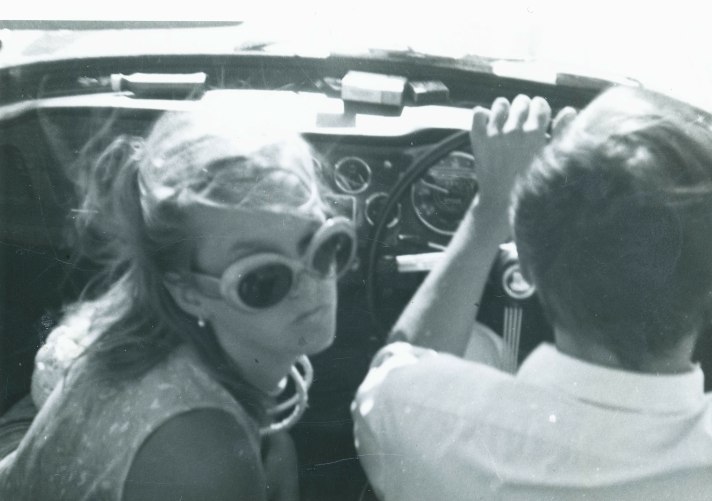
Juliet and I met up and decided on the names for our characters, taking the main names from our family as a kind of tribute to them, but at the same time knowing that these fictional creations were nothing like them. For example in the novel we have called Elizabeth’s mother Peggy. Peggy is the name my own mother was known by, but Peggy’s character (with the exception of her driving ability and ATS backstory) is nothing like my mother. Like all the characters in TSW, Peggy is her own person and she grew and developed within the novel as all fictional characters do.
 And so the novel began to take shape. I would write a few chapters and send them to Juliet who would read them and comment, particularly on the authenticity, because one of our main concerns was that this did reflect her experience in a real way. It was interesting and a fine line to tread.
For the political background I discovered that fifty years on there is a lot of information online. I was particularly thrilled to find a very interesting PhD thesis on the friendship and close ties between the Greek and Turkish Cypriots and that they even had a name: Koumbaroi. It is times like this when a writer knows that things are working out well.
Our aim for this book has been to reflect accurately the experience of a very young woman who found herself in the centre of a strange, and very hierarchical, male-centred world. And, along the way, to shine a light on what is now a vanished time.
The book will be published on March 11, 2027 and can be pre-ordered now.


