Authors in the Media – Winter 2026

Happy new year and we’re off to a bang.

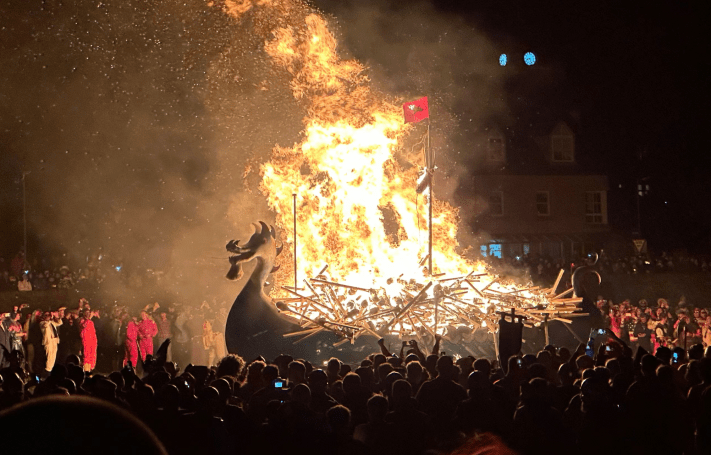
Daniel Stables had a feature in The Guardian about Shetland’s Up Helly Aa Viking fire festival, which is ‘bigger than Hogmanay’.

The raucous celebration of the new year and the islands’ Nordic heritage culminates in the ritual burning of a longship – and much drinking. In Lerwick, the capital of the archipelago, the locals have divined a unique way of passing the time, while honouring the deep-rooted Scandinavian influences on Shetland’s culture and history.

The book was also reviewed in the TLS in a “A travelogue-cum-anthropological study of communal celebration.”

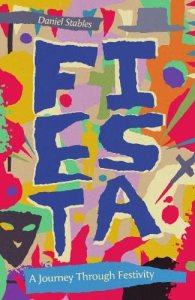
Daniel Stables’ debut book, Fiesta: A Journey Through Festivity (Icon Books), is out now.

A burning ship at Up Helly Aa Lerwick. Photograph: Daniel Stables

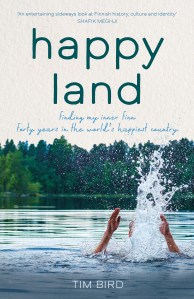
Tim Bird appeared live on Times Radio about his debut book Happy Land: Finding My Inner Finn (Eye Books).
In this clear-sighted – but never cynical – sideways look at the land of the sauna, the Northern Lights and the Moomins, Bird spotlights the Nordic nation’s distinctive culture, landscape and language. As he helps us understand the Finnish notion of contentment, are there life-lessons for the rest of us?

Mary Novakovich appeared BBC Radio 4’s Free Thinking programme about  Sunshine Saturday – the day more holidays are booked than any other.

From stagecoaches to aeroplanes, guidebooks to AI, the programme explores how travel has changed – and how the meanings we attach to it have shifted too. Was travel ever really a vehicle for self-discovery?

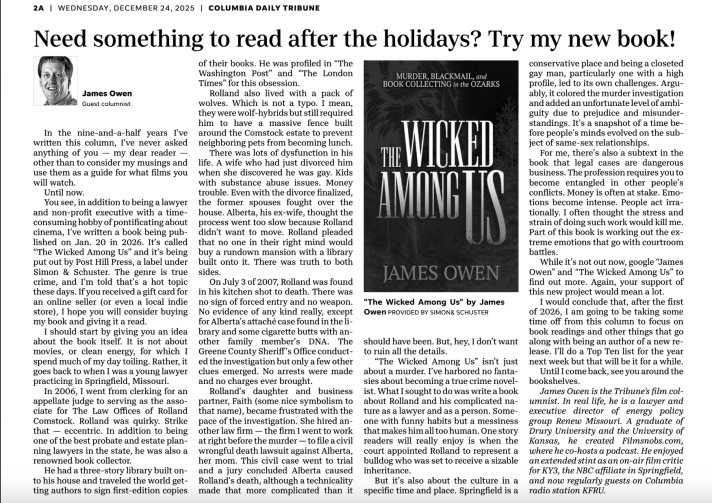
James Owen wrote an article for the Columbia Daily Tribune about his debut book The Wicked Among Us (Post Hill Press).

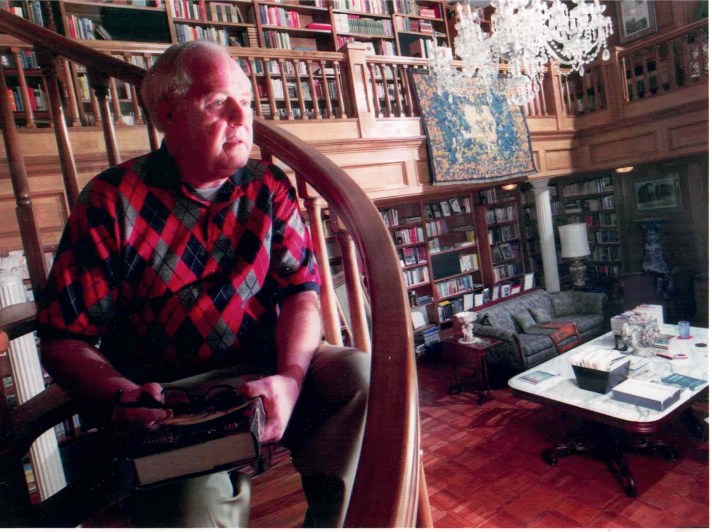
The story takes us back to Springfield, Missouri, where Owen once worked for Rolland Comstock: a brilliant probate and estate-planning lawyer, renowned book collector with a three-storey library, and owner of a pack of wolf-hybrids. Comstock’s life was as messy as it was fascinating – divorce, family troubles, money strains – and on 3 July 2007 he was found shot dead in his kitchen. No forced entry, no weapon, few clues, and no criminal charges.

The book published on January 20th.

Finally, Joe Luc Barnes wrote ‘Made in Kazakhstan: building an AI for a nation‘ for the Times of Central Asia. A fascinating look at how Kazakhstan is developing its own national AI ecosystem – not just importing Western or Chinese models, but shaping artificial intelligence around local language, culture and state priorities.

From digital sovereignty and education to public services and economic strategy, the piece explores what it really means to build AI for a country rather than simply deploying it in one – and why Kazakhstan sees this as central to its future.

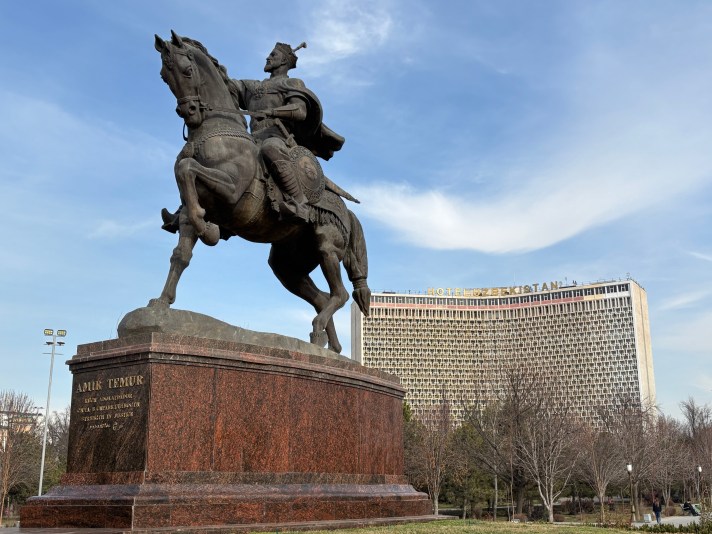
Look out for his debut this year, Farewell to Russia – A Journey through the former USSR (Elliott & Thompson). In the wake of Russia’s full-scale invasion of Ukraine, Joe set out to cross the former USSR to find out. From the silk road cities of Uzbekistan to the former gulags of Kazakhstan, tech-hungry Estonia to the storied vineyards of Georgia, he traces the very different paths these nations have taken since independence.

Joe will also be speaking at an event for the Royal Society for Asian Affairs on 2 June 2026, 18.00 BST. Register for a ticket now.

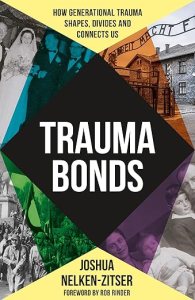
TRAUMA BONDS by Joshua Nelken-Zitser to Mudlark

Mudlark, an imprint of HarperCollins has snapped up the debut book by journalist Joshua Nelken-Zitser, an investigation into inherited trauma and healing generational wounds.

When Joshua sought therapy for his panic attacks and eating disorder, he assumed they stemmed from a traumatic breakup or the grief of losing a friend. To his surprise, a therapist suggested another factor — transgenerational trauma – the idea that trauma can cascade through the generations, almost like an unwanted inheritance. The process can take place through parenting behaviours, cultural factors, or possibly even genetics.

As the grandson of four Holocaust survivors, it seems reasonable that Joshua would bear this legacy. Indeed, he’ll share the pivotal moments that made him realise his family history had a more of an impact on him than he might have initially thought. But what sets Joshua’s book apart is that he won’t exclusively focus on the victims of the Holocaust. He’ll also engage with another distinct group: the descendants of Nazis.

Born in London to an immigrant father and an English mother, Joshua’s upbringing was profoundly shaped by his family’s harrowing experience of the Holocaust. Remarkably, all four of his grandparents were survivors, with his grandmother enduring the horrors of the Auschwitz concentration camp.

Motivated by his family’s history of oppression, Joshua pursued a career in journalism, driven by a desire to elevate marginalised voices. He embarked on this career after completing an MA in Politics at the University of Edinburgh and an MA in Broadcast Journalism at City, University of London.

Joshua launched his career at LBC, later freelancing with prestigious outlets such as the BBC, The Telegraph, Wired, The Spectator, and The Times, among many others. He is now the is a Senior News Reporter at Business Insider’s London bureau, covering breaking news, foreign affairs, and US politics.
The book will publish in January 2027 and can be pre-ordered now.

Behind the Book: SEASON by George Harrison

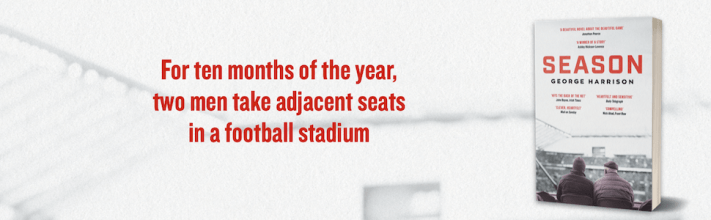
I figured, when I started work on Season, that since I spend so much time watching football, thinking about football, and talking about football, I may as well start writing about it too. I’ve supported Norwich City since I was a boy, and two decades of delight and despair have naturally left me with a vast repository of memories and impressions to draw upon. I’m wary of trite and inflexible ‘rules’ around writing, but there is something to be said for writing what you know, and I know what it means to be a football fan.

Season was not my first attempt at writing a novel. By the time I started on the book which would become my debut, I had already drafted and discarded four or five full-length manuscripts. None of them were good enough to be published, but the process of composing and editing them taught me a lot and made me a more thoughtful writer.

With Season, the first thing I did was settle on a structure. What about a novel, I thought, which takes place over the thirty-eight games of a Premier League season, with a chapter for each match? This formal framework gave me a skeleton around which I could neatly build the narrative, which I wanted to ground in the match-day experiences of football supporters rather than focussing too much on the events of the pitch. I thought writing about two men at different life stages would help me say something about the universality of the fan experience and football’s ability to bridge social gaps, and this led naturally to the unnamed Old Man and Young Man at the heart of the novel and the friendship which develops very slowly between them.

The first draft of Season was very different from the version published by Eye Books in 2025. Season had initially emerged as a short and self-conscious novella, which (I think) did a good job of capturing the mood and the spirit of the terraces but only skimmed the surface of everything else. Thankfully, this draft still had enough about it to win me an Escalator New Writer Fellowship at the National Centre for Writing. As part of the programme, I spent the best part of a year refining the manuscript under the mentorship of the novelist Michael Donkor.

The bones were already there, but Michael’s external perspective helped me get to grips with the guts of the story. I developed the characters, expanded the narrative, and teased out some themes which had previously been lurking just under the surface. But perhaps Michael’s best advice was to do with the book’s title.

I had been going with the clunkier and far less poetic Season Ticket, until Michael suggested I ‘drop the Ticket.’ Sometimes, in football, you know a shot is going in as soon as it leaves the striker’s boot, and this suggestion had the same feeling about it. In that moment, Season was born, and I knew then that I was on to a winner.
Season was shortlisted for the Nero Book Award for best Debut Fiction, published by Lightning Books.

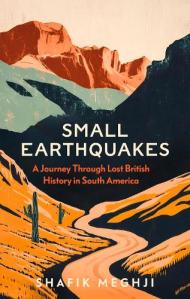
Behind the Book: SMALL EARTHQUAKES by Shafik Meghji

Some places feel like home even if you’ve never been there before. Buenos Aires was like that for me. I arrived at the end of my first visit to South America, a life-shifting backpacking trip through Brazil, Bolivia, Peru, Chile and Argentina after giving up a job as a news and sports reporter for the Evening Standard. In some sense, part of me never left the city.
These travels cemented an interest in South America that developed in childhood from a disparate patchwork of sources. Growing up in South London, I was captivated by stories of the Amazon and the Inca Empire, by The Mysterious Cities of Gold cartoon, Willard Price’s Amazon Adventure and fleeting clips of Diego Maradona, Gabriel Batistuta and Carlos Valderrama. Later I devoured Michael Palin’s TV travelogues, David Attenborough’s documentaries, Graham Greene’s Travels with My Aunt and Paul Theroux’s The Old Patagonian Express.

My time in South America also prompted a change of career. I moved into travel writing and ultimately relocated to Buenos Aires for a year. There, I frequently came across fragments of British history and culture: the English-language Buenos Aires Herald newspaper, a shuttered Harrods store on the main shopping strip, the nearby Richmond café.

Close to my apartment in Villa Crespo were streets named ‘Thames’, ‘Darwin’ and ‘FitzRoy’. Farther afield, there were intriguingly titled suburbs, towns and cities (‘Hurlingham’, ‘William C. Morris’) and football clubs (‘River Plate’, ‘Newell’s Old Boys’).

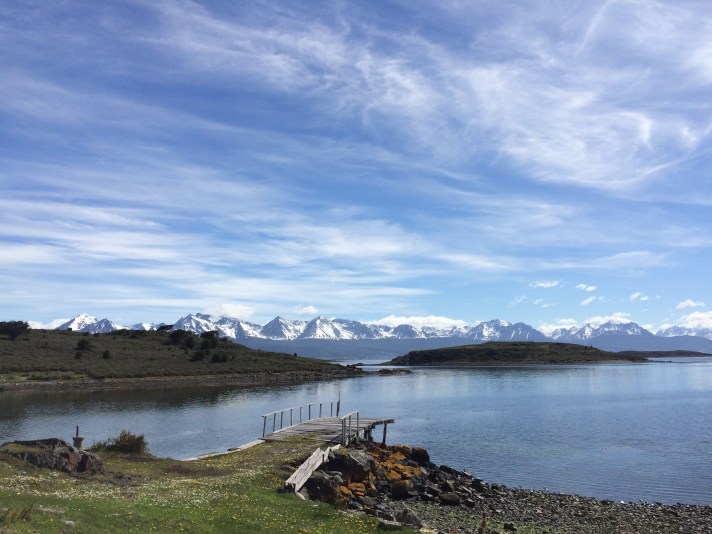
The Beagle Channel in Tierra del Fuego

I came across British schools, polo clubs and rugby teams, as well as a Welsh-Argentine community in Patagonia. It soon became apparent that Britain and Argentina’s links ran far deeper than simply conflicts in the South Atlantic and rivalries on the football pitch.

These experiences were echoed across the continent. Everywhere I went, I stumbled upon forgotten stories and unexpected connections between Britain and South America, a history I wasn’t taught about in school and didn’t see represented in the media or popular culture.

Crossed Off the MapAs I travelled across Bolivia to research my first book, Crossed Off the Map, I came across a graveyard of British-built trains on the edge of the world’s biggest salt flat, a notorious Amazonian rubber trader with a home in Hampstead, a tall tale about a British diplomat stripped naked, tied to an ass and kicked out of La Paz.

I read about Walter Raleigh’s search for El Dorado in what would become the British colony of Guyana, a land laboured by enslaved Africans and indentured South Asians; British soldiers who fought alongside Simón Bolívar in the continent’s wars of independence; a town built by a British railway company in southern Brazil.

But the stories that most captured my imagination come from the Southern Cone: Argentina, Chile and Uruguay. Travelling from the Atacama Desert to Tierra del Fuego, Easter Island to SouthGeorgia, I slowly unearthed a shared history spanning five centuries and featuring nitrate kings and wool barons, footballers and pirates, polar explorers and radical MPs, cowboys and missionaries.

A Welsh tearoom in Patagonia

From ghost towns in the desert to far-flung ranches in the sub-polar tundra. Rusting whaling stations in the South Atlantic to an isolated railway built by convicts. The southernmost city on the planet to a crumbling port known as the ‘Jewel of the Pacific’.

On the way, I learned about Britain’s enduring impact on Argentina, Chile and Uruguay – from sparking wars, forging national identities and redrawing borders to a tangled role in their colonisation and decolonisation – and how these countries have shaped Britain in profound and unexpected ways.

Eventually, after 10 years of writing and research, these places, characters and stories came together in Small Earthquakes.

Behind the Book: SANCTUARY by Tom Gaisford

Sanctuary was conceived in the arrivals queue at Stansted. It was my first time, and the whole thing was over in seconds.

“What if,” the muse whispered, “a refugee lawyer like you were to claim asylum in your own country?”

I closed my eyes and saw an immigration officer beckoning me forward. “No have pasaporte,” I told her, attempting a Hispanic accent. The officer sank into a trap room, the stage revolved, and in the middle distance I could make out the concertina wire and yellow brick walls of an immigration removal centre. I walked up to the door and opened it. The writing had begun.

Long before Sanctuary was published, I worked in immigration and asylum law at a top-ranked firm in Tottenham. There, I developed an indignant, sometimes self-righteous disdain for our government’s treatment of vulnerable migrants and asylum seekers. If we are the protagonists of our own lives, the Home Office was my antagonist. We fought them day in, day out on our clients’ behalf, essentially to protect basic human rights. It was rewarding, while also gruelling.

At first, the novel was a kind of escape: a way to explore that world through a playful, satirical, romantic lens. Later, the escape became something else. I began to see the book as a vehicle for taking readers into a legal and moral landscape, and not letting them leave unchanged.

Then, like any good villain, reality turned up to wreck my plot. In 2017, Callum Tulley blew the whistle on abuses at Brook House IRC. “It’s just like your story idea,” a friend told me, and my heart sank – for the victims, for all of us in whose name these places were being run, and for my fragile novel. I wrote faster, and made the crime at the heart of my story so heinous it couldn’t possibly happen in real life.

Life, of course, kept pace.

Working as a barrister left little time for writing, but the pandemic offered a strange window. By then my wife was working as a consultant paediatrician in Gibraltar, and we were living across the border in Spain with our two-year-old and her newborn sister. Time was still scarce, but I finished a draft. Then came Rwanda, and suddenly the parallels between policy and plot were impossible to ignore. A retired literary agent friend suggested I “hang fire” on submitting. Instead, I absorbed what was happening into the manuscript and kept going.

Sanctuary by Tom Gaisford

Somewhere in the middle I hit what publishing people call the dark night of the soul. Ten years had passed. I’d devoted an inordinate amount of thought to a book that still didn’t feel complete, and I couldn’t put my finger on why I’d been compelled to write it.

Reluctantly, I set the draft aside and began blueprinting another novel. It was only then that something clicked. I realised the tension I kept circling – freedom, responsibility, dignity, control – ran through my writing, and through me. I went back, gave the manuscript the inner story it had been crying out for, renamed it Sanctuary (its working title, The Muse and The Mole, had never suited it), and handed it over.

And here we are. The book is out in the world and I’m proud of her. I’d say we’re proud of her – only the muse speaks for herself.

Sanctuary (Cinto Press) is out now.


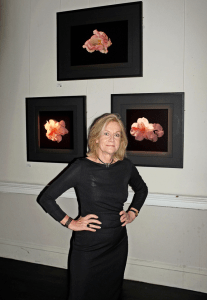
A tribute to Carole Latimer

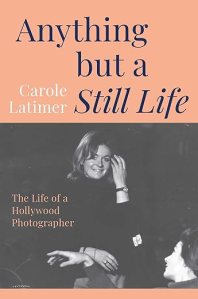
Following the recent sad death of Carole Latimer, Anything But a Still Life stands as a fitting celebration of a remarkable life behind the lens, publishing on 3 March.

The daughter of actor Hugh Latimer, Carole grew up immersed in the worlds of theatre, film and performance – a background that profoundly shaped her instinctive understanding of actors and creative lives.

Over an extraordinary career, Latimer photographed more than 3,000 subjects, including Hugh Grant, Sir Dirk Bogarde, Rachel Weisz, Julian Fellowes, Sir Hardy Amies, Kim Cattrall, David Carradine, Scott Glenn, Sir John Gielgud and Katharine Hepburn capturing them with a sensitivity and intelligence that became her hallmark.

Hugh Grant – photographed in her studio in Notting Hill

At the heart of the book is her lifelong friendship and mentorship with the legendary Eve Arnold, which began with a chance meeting on a film set in Austria and shaped Latimer’s empathetic approach to portraiture for more than thirty years.

With behind-the-scenes stories, previously unseen images, and a foreword by Julian Fellowes, Anything But a Still Life is both an elegy and a lasting testament to a photographer whose work revealed the humanity behind fame.

Pre-order the book now: https://amzn.to/45qFsIt

Authors in the Media – Autumn 2025

Autumn leaves fall as our authors rise in the media.

George Harrison’s novel, Season (Lightning Books), was shortlisted for the Debut Fiction category of the Nero Book Awards and the Debut Novel category of the East Anglian Book Awards.

The 2025 debut fiction judges at Nero remarked that ‘Season captures perfectly the essence of male isolation in a sensitive, unsentimental way. Whether you love or loathe football culture, this book offers a glimpse of its vital place in the human heart.’

A further congratulations to Shafik Meghji, whose book Small Earthquakes: A Journey Through Lost British History in South America, has been named the Travel Narrative Book of the Year by the British Guild of Travel Writers.

This year’s judges ‘described this book as being beautifully written, a seductive historical narrative, and a fascinating and rewarding travelogue.’

The award-winning journalist, travel writer, author, editor, and broadcaster also made headlines in The Times, BBC Travel, The Observer, Geographical and a number of major outlets following the success of his book.

Don George at the BBC, wrote: ‘Combining the immediacy of a travel memoir with the depth of a scholarly history lesson, Small Earthquakes illuminates how Britain helped shape these nations through economic ventures, cultural exchange and political intervention, and how those regions in turn have reshaped Britain, from the Falklands conflict to canned Fray Bentos pies.

Continuing the theme of travel, Daniel Stables’s article for the National Geographic Traveller, was named the Travel Feature of the Year!

Stables’s winning article recounted a summer hiking expedition in the remote Icelandic Highlands, exploring the region’s landscapes and folklore.

Stables was also nominated for Domestic Travel Writer of the Year. His debut narrative travel book Fiesta, is out now.

And it was wonderful to see FOUR agency writers from the stable in the British Guild of Travel Writers ‘Book Friday’ gift guide: Shafik Meghji, Daniel Stables, Mary Novakovich & Tim Bird.

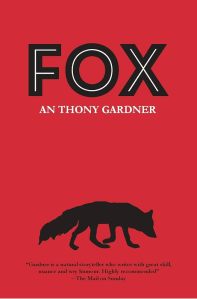
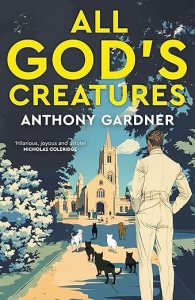
In other news, if Anthony Gardner’s previous book, Fox – chosen as Book of the Year by Sue Gaisford in The Tablet – is anything to go by, All God’s Creatures is set to be just as successful.

Gardner has also already received up strong early coverage, with reviews from the Irish Examiner, Daily Mail, Nicholas Coleridge, Amanda Craig, The Tablet, The Crack and Jasper Rees.

The Irish Examiner described All God’s Creatures as ‘a wonderfully enjoyable tonic for our current reality’.

Nicholas Coleridge similarly noted: ‘This might be the wittiest book I’ve read in five years – hilarious, joyous and astute. Not a dud word from beginning to end. Highly recommended’.

All God’s Creatures was published and launched at Daunt Books Marylebone on November the 6th.

Authors in the Media – Summer 2025

It has been a lively run in the press and on air for Cull & Co authors, with political history, spycraft and sharp cultural commentary all jostling for attention.

We start with Seth Thevoz, whose work continues to rattle the crockery in Westminster. An archived extract doing the rounds captures his characteristic mix of archival ferreting and wry prose, reminding readers why his investigations travel so well beyond the committee room read it here.

Michael Robb’s Shelf Life keeps prompting conversations about the past, present and future of bookselling. The notices have been steady and enthusiastic, and the author has been out and about discussing the trade with the sort of good humour that only a lifetime at the coalface can produce. The TLS reviewed his book to cap off a wonderful publication period.

Over in the culture wars corner, Nigel Winter sharpened the quill for Country Squire, delivering “Vive la Goddess!” – a spirited, mischievous meditation on our current taste for idols and iconoclasm alike. It is a lively read, and very Nigel. Dive in.

On geopolitics, Joe Luc Barnes has been charting the EU’s renewed attention to Central Asia. His recent video explainer lays out the energy, security and trade stakes with clarity, the sort of briefing you can watch over a coffee and come away feeling properly briefed. Watch here. His debut book Farewell to Russia – A Journey Through the Former USSR, will be published in March 2026.

Tom Gaisford’s debut novel Sanctuary has opened doors well beyond the book pages. In The Times he described writing as an alternative form of advocacy, reframing legal experience as narrative muscle archived link. The Channel Islands press also took notice, with Bailiwick Express praising the lawyer-turned-author’s asylum thriller for its moral clarity and pace review.

In music and mythmaking, Sean Egan’s Decade of Dissent has drawn nods from both niche and mainstream outlets. All About The Rock spotlighted the book’s case that 1960s Dylan changed more than just chord progressions review, while SPIN zoomed out to the wider cultural shockwaves of the period feature.

From Wall Street to Washington, Jake Donoghue unpacked the uneasy courtship between Trumpworld and crypto for The Spectator – a cool-headed piece arguing for scepticism amid the laser-eyes and conference razzmatazz read.

And then there is Tim Willasey-Wilsey, everywhere at once. Reviews have been generous, from The Telegraph’s take on The Spy and the Devil review to Gill Bennett’s thoughtful assessment at Engelsberg Ideas review, KCSi’s write-up from Andrew Boyd review, and an international angle from The Wire in India feature. The Times ran two historical pieces tied to the book’s themes – one on the British charm that opened doors in Hitler’s inner circle read, another asking whether a British spy helped topple Labour’s first government read. Alan Judd weighed in at The Spectator on how much we really knew in the early 1930s column, while The Scotsman revisited the enduring relevance of a 1938 MI6 warning column. For contemporary policy, RUSI carried his argument that America, in the Trump era, cannot be taken on trust and asks what the UK should do next commentary.

Broadcast has matched print. Tim joined BBC Radio 4’s Today for a brisk five-minute segment that distilled the book’s core question of risk and deception listen, sparred amiably with Hugo Rifkind on Times Radio watch, and spoke at length to Giles Brown on Talk Radio Europe for a thoughtful twenty-two minute conversation listen.

THE ROYAL FILM PERFORMANCE by Robert Sellers and Gareth Owen to The History Press

The History Press have secured publication rights to The Royal Film Performance: A Celebration by Robert Sellers and Gareth Owen.

Fully authorised by The Film and Television Charity and by Buckingham Palace, this book will celebrate the 80th anniversary of iconic Royal Film Performances.

For nearly eight decades, the Royal family has been gracing the red carpet to see the most eagerly anticipated film of the year. Since 1946, the Royal Film Performance has been an annual highlight of the entertainment social calendar, where cinema’s most famous icons have come face to face with royalty.

With authors Gareth Owen and Robert Sellers, dive into the glitz, glamour and regal encounters of each Royal Film Performance, the memorable moments and the fascinating stories. From Marilyn Monroe’s nervous encounter with Queen Elizabeth II to the cheeky remarks of Jayne Mansfield, witness the intersection of cinema’s luminaries and royalty.

Photographer Harry Myers attended the first Royal Film Performance in 1946 and documented the event for nearly five decades before passing the baton to his son, Scott. With access to Harry’s archive and the charity’s extensive collection—including brochures, reports, press clippings, and ephemera from all 72 performances—the authors will create a richly illustrated and engaging book that celebrates the stars, Royal guests, and legacy of one of Britain’s most distinguished charities.

After earning a degree in Applied Physics in 1994, Gareth Owen entered the film industry, launching a production company at Pinewood Studios. He worked with Edgar Wright and Sir Norman Wisdom before becoming Sir Roger Moore’s personal manager and ghostwriting all four of his autobiographies. Gareth has authored, co-authored, or ghosted over 20 books.

Originally training as an actor, Robert Sellers turned to film journalism, writing for The Guardian, The Sunday Times, Empire, and The Independent, among others. He has authored, co-authored, and ghosted 25 books.

As the curtain rises on this cinematic celebration, The Royal Film Performance: A Celebration pays homage to the stars, the royals and the unsung heroes of the industry, sure to delight fans of the royal family and cinema aficionados alike.

The book will be released on October 23, 2025 and can be ordered now.

THE WICKED AMONG US by James Owen to Post Hill Press

A tale of murder, blackmail, sex and book collecting in the Ozarks has been snapped up by Post Hill Press in the USA.

Atop the Ozark Mountains, Rolland Comstock lived in what was described as “a Grimm Fairy tale.” With his pet wolves roving the estate and a world-famous book collection to obsess over, Rolland was no ordinary country lawyer. When he was murdered, Rolland’s story turned into a tragic mystery; one some did not want to see solved. This intimate true crime tale not only seeks to resolve the question of who killed this man but also to examine his life. It is a thriller from the perspective of the one character who can no longer tell the story himself.

Though the murder remains officially unsolved, this book delivers its own revealing conclusion—and asks why some secrets are better left buried.

This is also a story the author witnessed first-hand.

James Owen is a lawyer who worked with Rolland Comstock as well as at the firm that tried the case against his ex-wife. As a young lawyer seeking a private sector position, James met Rolland while applying for an associate role at his law firm. Captivated by Rolland’s quick wit and impressed by his extensive knowledge, James joined his firm, eager to learn from the best. However, he soon uncovered a whirlwind of personal and professional turmoil.

Outside law, he has written most of his life, most notably as the co-creator and writer for Film Snobs. He wrote for this site prolifically for six years until he became an on-air film critic for KY3, the NBC affiliate in Springfield. He also hosts a podcast for his non-profit called Renew Gurus.

The book will be published in January 2026 and available for pre-order now on Amazon or Barnes&Noble.