

Michael Smith’s THE REAL SPECIAL RELATIONSHIP continues to garner stellar press. The Times Literary Supplement (right) featured it as a lead review with an introduction by the editor in chief. It was described as “a lucid account, rich in anecdote and detail.”
The Cipher Brief, a daily email put out by a US organization which produces reports on intelligence issues by former prominent spooks, also published its own review and notes “Smith’s careful research enables him to challenge a few myths.”
The book was also reviewed in Country Life Magazine by Allan Mallison.
“Michael Smith was an intelligence professional before turning to journalism. There are few as qualified as he to put the whole story together and few who could tell it with such cogency. He relates the 80 years’ cooperation between the intelligence communities (principally the SIS and CIA) in astonishing and revelatory detail, with pace, clarity and authority. It is, quite simply, magnificent.”
And by John Rathbone, the Financial Times’ security & defence correspondent, who said:
“Michael Smith, a former military intelligence officer and author of several books about spying, handles the material judiciously and writes with élan.”
 Mary Novakovich’s MY FAMILY AND OTHER ENEMIES published August 18 and was featured in Country Life (right). She also appeared on DK Travel’s Where To Go podcast, the Travel Writing World podcast, Destination Food Drink and Monocle Reads: Meet the Writers.
Seth Thevoz’s BEHIND CLOSED DOORS was reviewed in The Spectator Australia, noting “despite the vastness of its ambition, Behind Closed Doors serves as a well-researched one-stop introduction to the complex social history of the club.”
The London Review of Books also wrote an illuminating essay about the book and Clubland in general.
The book was also reviewed in The Financial Times, saying:
“This well-researched romp through the history of the capital’s private members’ clubs overturns many myths along the way… Compendious and entertaining, Behind Closed Doors: The Secret Life of London Clubs is the result of thorough research, lightly worn. Thévoz writes with energy, conviction and amusement at the ever-changing variety of human congregation and its foibles.”
![The hall of the Athenaeum, c. 1840. [Getty Images]](https://cullandco.com/wp-content/uploads/2022/08/screen-shot-2022-08-12-at-10.47.59.png?w=1024&h=716)
Caroline Boggis-Rolfe’s ADRIATIC published on August 15 and she appeared on The History Hack podcast.
Henry Schlesinger also discussed honey traps on the Spycraft 101 podcast.



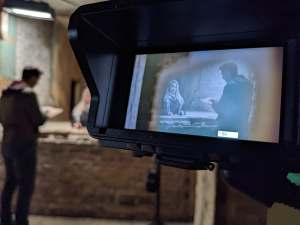 Sarah-Louise Miller features as an expert on the new documentary series, now airing on Sky History on Mondays at 9pm – ‘

 Lucy studied languages and philosophy at Oxford and joined the Foreign Office straight out of university in search of adventure and new people and places. She quickly moved across to the Department for International Development (DFID), where she spent time in Georgia, Armenia and Azerbaijan, China and Sierra Leone. She left Sierra Leone to join her now husband in Jordan, taking the long way there across the Sahara, Europe, the Balkans, Turkey and Syria in a much-beloved Land Rover. In Jordan, she worked for Her Majesty Queen Rania while spending much time bumping around the phenomenal Jordanian desert.
 Roberto taught at New York University from 1975 to 1995 in the Spanish and Portuguese, and Comparative Literature Departments. He is the director of La Flauta Mágica publishing company, specializing in critical bilingual editions of poetry and the rescue of major poetical works written in Spanish. Prize wins include the National Prize of the Ministry of Culture of Uruguay, essay; National Prize of the Ministry of Culture of Uruguay, poetry; Nancy Bacelo Foundation Poetry Prize; Cultural Center of Spain Theatre Prize. He was also awarded the 2021 Amado Alonso International Prize of Literary Criticism for his book El pensamiento chino (Chinese Thought) and will be published soon by Editorial Pre-Textos in Spain.
 This book focuses on the big ‘7,’ mega productions of the 80s, British musicals that were larger than life, colourful and spectacular, shows that certainly paved the way for the ‘event’ musicals of recent years such as The Lion King and Wicked.
 As the horror of Nazism tightened its grip on Germany, Jews found themselves trapped and desperate; for many, their only hope of salvation came in the form of a small, bespectacled British man: Frank Foley.
 Estonian language rights have been snapped up by AS Aripaev, based in Tallinn, which is owned by the Swedish family-owned media group Bonnier, brokered by Andrew Nurnberg Baltic.
